Apple
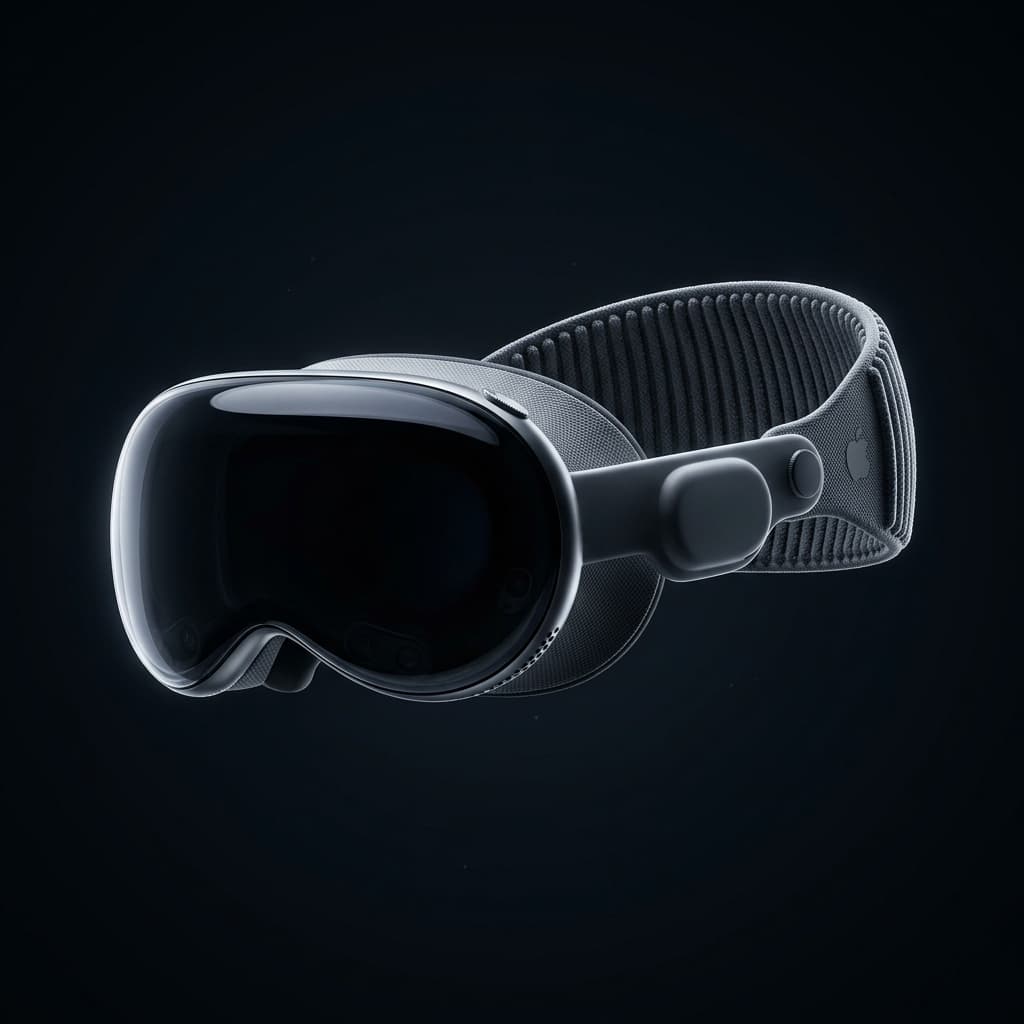
Apple Vision Pro
Apple's spatial computer with a dual-chip design (M2 for compute, R1 for sensor processing), 23 million pixels across micro-OLED displays and 12ms photon-to-photon latency.
- Chips
- Apple M5 chip, 10-core CPU with 4 super cores and 6 efficiency cores, 10-core GPU, 16-core Neural Engine, 153GB/s memory bandwidth, 16GB unified memory, Apple R1 chip, 12-millisecond photon-to-photon latency, 256GB/s memory bandwidth
- Camera
- Stereoscopic 3D main camera system, Spatial photo and video capture, 18 mm, ƒ/2.00 aperture, 6.5 stereo megapixels
- Display
- 23 million pixels, 3D display system, Micro-OLED, 7.5-micron pixel pitch, 92% DCI-P3, Supported refresh rates: 90Hz, 96Hz, 100Hz, 120Hz, Supports playback multiples of 24 fps and 30 fps for judder-free video, Video Mirroring Up to 720p AirPlay for mirroring your view in Apple Vision Pro to any AirPlay-enabled device
- Sensors
- Two high-resolution main cameras, Six world-facing tracking cameras, Four eye-tracking cameras, TrueDepth camera, LiDAR Scanner, Four inertial measurement units (IMUs), Flicker sensor
The decision
Where it wins
- Mind-blowing display resolution
- Flawless eye-tracking interface
- Seamless Apple ecosystem integration
Where it doesn't
- Exorbitant price point
- Heavy front-weighted design
- External battery pack is cumbersome
Specifications
Structured product data, grouped by system.
Core hardware01
| Chips | Apple M5 chip, 10-core CPU with 4 super cores and 6 efficiency cores, 10-core GPU, 16-core Neural Engine, 153GB/s memory bandwidth, 16GB unified memory, Apple R1 chip, 12-millisecond photon-to-photon latency, 256GB/s memory bandwidth |
|---|
Display & media01
| Display | 23 million pixels, 3D display system, Micro-OLED, 7.5-micron pixel pitch, 92% DCI-P3, Supported refresh rates: 90Hz, 96Hz, 100Hz, 120Hz, Supports playback multiples of 24 fps and 30 fps for judder-free video, Video Mirroring Up to 720p AirPlay for mirroring your view in Apple Vision Pro to any AirPlay-enabled device |
|---|
Physical & connectivity01
| Device Weight | 26.4–28.2 ounces (750–800 grams) |
|---|
Platform & software01
| Built-In Apps | App Store, Encounter Dinosaurs, Files, Freeform, Keynote, Mail, Messages, Mindfulness, Music, Notes, Passwords, Photos, Safari, Settings, Spatial Gallery, Tips, TV, Widgets, Books, Calendar, Clock, Home, Maps, News, Podcasts, Reminders, Shortcuts, Stocks, Voice Memos |
|---|
Other specifications10
| Camera | Stereoscopic 3D main camera system, Spatial photo and video capture, 18 mm, ƒ/2.00 aperture, 6.5 stereo megapixels |
|---|---|
| Sensors | Two high-resolution main cameras, Six world-facing tracking cameras, Four eye-tracking cameras, TrueDepth camera, LiDAR Scanner, Four inertial measurement units (IMUs), Flicker sensor |
| Capacity | 256GB, 512GB, 1TB |
| Wireless | Wi-Fi 6 (802.11ax), Bluetooth 5.3 |
| Key Features | Dual Micro-OLED 4K displays, M2 & R1 dual-chip, advanced eye and hand tracking |
| Accessibility | VoiceOver, Zoom, Color Filters, Hearing Device Support, Closed Captioning, Voice Control, Switch Control, Dwell Control, Pointer Control, Support for Made for iPhone hearing devices, Support for Made for iPhone switch controllers |
| Operating System | visionOS 26 |
| Supported Input Accessories | Keyboards, Trackpads and mouse devices, Game controllers |
| Interpupillary Distance (IPD) | 51–75 mm |
| Supported Spatial Accessories | Logitech Muse, PlayStation VR2 Sense controller |
Read the record
- Source on record
- apple.com
Vision Pro is the most technically accomplished headset anyone has shipped, and that is a separate question from whether you should own one. The display resolution and the eye-tracking interface genuinely feel like a generational step — selecting with a glance and a pinch works so well that it stops being remarkable within an hour, which is the highest compliment an interface can earn. The problems are physical and stubborn. The weight sits forward, so an hour is a session and three hours is not; the external battery is a tether you keep noticing; and the price puts it beyond any consumer justification. It remains a developer and enterprise device wearing a consumer product's marketing, and buying it for entertainment is buying an expensive way to watch films alone.
Vision Pro is the most technically accomplished headset anyone has shipped — 23 million pixels across two micro-OLED panels, an M2/R1 dual-chip split with 12ms photon-to-photon latency — and that is a separate question from whether you should own one.
What genuinely works
The resolution and the eye-tracking interface feel like a generational step. Selecting with a glance and a pinch works so well that it stops being remarkable within an hour, which is the highest compliment an interface design can earn. Inside the Apple ecosystem, the continuity with Mac and iPad is seamless.
Why it is still not a consumer product
The problems are physical and stubborn:
- Weight sits forward. An hour is a session; three hours is not.
- The battery is a tether you keep noticing.
- The price — $3,499 — is beyond any consumer justification.
It remains a developer and enterprise device wearing a consumer product's marketing. Buying it for entertainment is buying an expensive way to watch films alone.
Who should buy
Spatial-computing developers, enterprise deployments with a specific defined use case, and early adopters who have genuinely accounted for the comfort limits before paying.
Frequently Asked Questions
Who is Apple Vision Pro for?↓
What are the drawbacks of Apple Vision Pro?↓
What does Apple Vision Pro do well?↓
How much does Apple Vision Pro cost?↓
What is the Fathom Layer design score for Apple Vision Pro?↓
Alternatives to consider
See all alternatives →- Another option XREAL One Pro
Large virtual displays that hold their position
Explore its evidenceDesign score 9.0/10 - Another option Google Android XR Glasses
Platform-neutral — works natively on both Android and iOS
Explore its evidenceDesign score 9.0/10 - Another option Ray-Ban Meta Smart Glasses
Looks like normal sunglasses
Explore its evidenceDesign score 9.5/10
Further reading
- How to build a local AI server with used GPUs: the RTX 3090 & Tesla P40 guideGuide
- Building a Tesla P40 rig for local AI: what you're really signing up forGuide
- Running and fine-tuning open models on Windows (WSL2, DirectML, CUDA)Guide
- Optimising local LLM inference: where the bottleneck actually isGuide
Featured badge
Building this product? Add the badge to your site to show it’s in the index.

<a href="https://fathomlayer.com/ecosystem/ar-glasses/apple-vision-pro" target="_blank" rel="noopener noreferrer"><img src="https://fathomlayer.com/fathom-badge.svg" alt="Featured on Fathom Layer" width="250" height="54" /></a>