
Versus Engine
Apple Vision Pro vs XREAL One Pro
Specs, price and the one trade-off that actually decides it — Apple Vision Pro against XREAL One Pro, side by side.
Cheaper to start
XREAL One Pro
Starts about $3,000 lower.
Rated higher
Apple Vision Pro
9.2 vs 9.0 on our design scale.
Standout
Apple Vision Pro
Mind-blowing display resolution
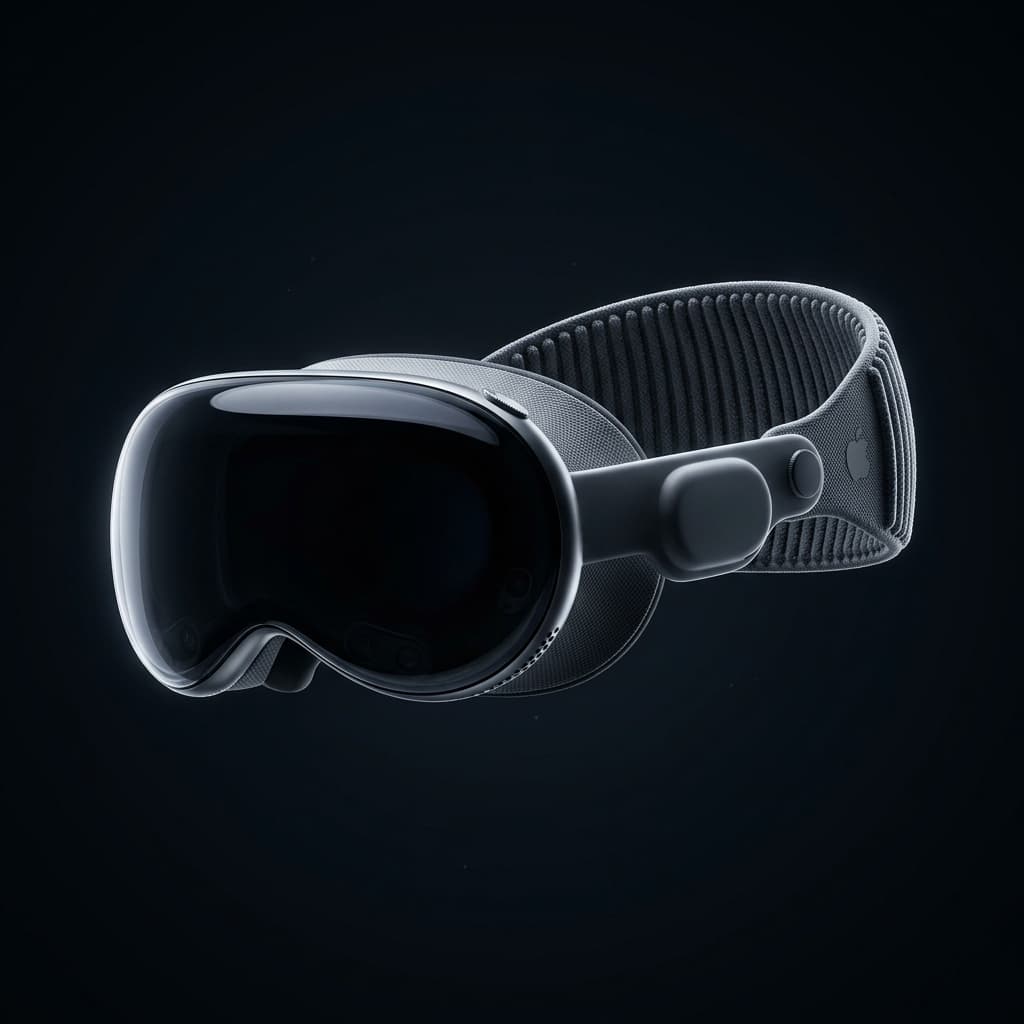
Apple Vision Pro
Apple's spatial computer with a dual-chip design (M2 for compute, R1 for sensor processing), 23 million pixels across micro-OLED displays and 12ms photon-to-photon latency.
Where it wins, where it doesn't
Pros
- Mind-blowing display resolution
- Flawless eye-tracking interface
- Seamless Apple ecosystem integration
Cons
- Exorbitant price point
- Heavy front-weighted design
- External battery pack is cumbersome
Specifications
- Display23 million pixels, 3D display system, Micro-OLED, 7.5-micron pixel pitch, 92% DCI-P3, Supported refresh rates: 90Hz, 96Hz, 100Hz, 120Hz, Supports playback multiples of 24 fps and 30 fps for judder-free video, Video Mirroring Up to 720p AirPlay for mirroring your view in Apple Vision Pro to any AirPlay-enabled device
- AccessibilityVoiceOver, Zoom, Color Filters, Hearing Device Support, Closed Captioning, Voice Control, Switch Control, Dwell Control, Pointer Control, Support for Made for iPhone hearing devices, Support for Made for iPhone switch controllers
- Audio—
- Built-in AppsApp Store, Encounter Dinosaurs, Files, Freeform, Keynote, Mail, Messages, Mindfulness, Music, Notes, Passwords, Photos, Safari, Settings, Spatial Gallery, Tips, TV, Widgets, Books, Calendar, Clock, Home, Maps, News, Podcasts, Reminders, Shortcuts, Stocks, Voice Memos
- CameraStereoscopic 3D main camera system, Spatial photo and video capture, 18 mm, ƒ/2.00 aperture, 6.5 stereo megapixels
- Capacity256GB, 512GB, 1TB
- ChipsApple M5 chip, 10-core CPU with 4 super cores and 6 efficiency cores, 10-core GPU, 16-core Neural Engine, 153GB/s memory bandwidth, 16GB unified memory, Apple R1 chip, 12-millisecond photon-to-photon latency, 256GB/s memory bandwidth
- Color Accuracy—
- Compatibility—
- Device Weight26.4–28.2 ounces (750–800 grams)
- DoF—
- Dynamic Frame Interpolation—
- FOV—
- Image Correction—
- Interpupillary Distance (IPD)51–75 mm
- IPD Compatibility—
- key_featuresDual Micro-OLED 4K displays, M2 & R1 dual-chip, advanced eye and hand tracking
- Lens Transparency—
- M2P Latency—
- Operating SystemvisionOS 26
- Refresh Rate—
- Screen Size—
- SensorsTwo high-resolution main cameras, Six world-facing tracking cameras, Four eye-tracking cameras, TrueDepth camera, LiDAR Scanner, Four inertial measurement units (IMUs), Flicker sensor
- Stabilization Algorithm—
- Supported Input AccessoriesKeyboards, Trackpads and mouse devices, Game controllers
- Supported Spatial AccessoriesLogitech Muse, PlayStation VR2 Sense controller
- WirelessWi-Fi 6 (802.11ax), Bluetooth 5.3
- X1 Chip—
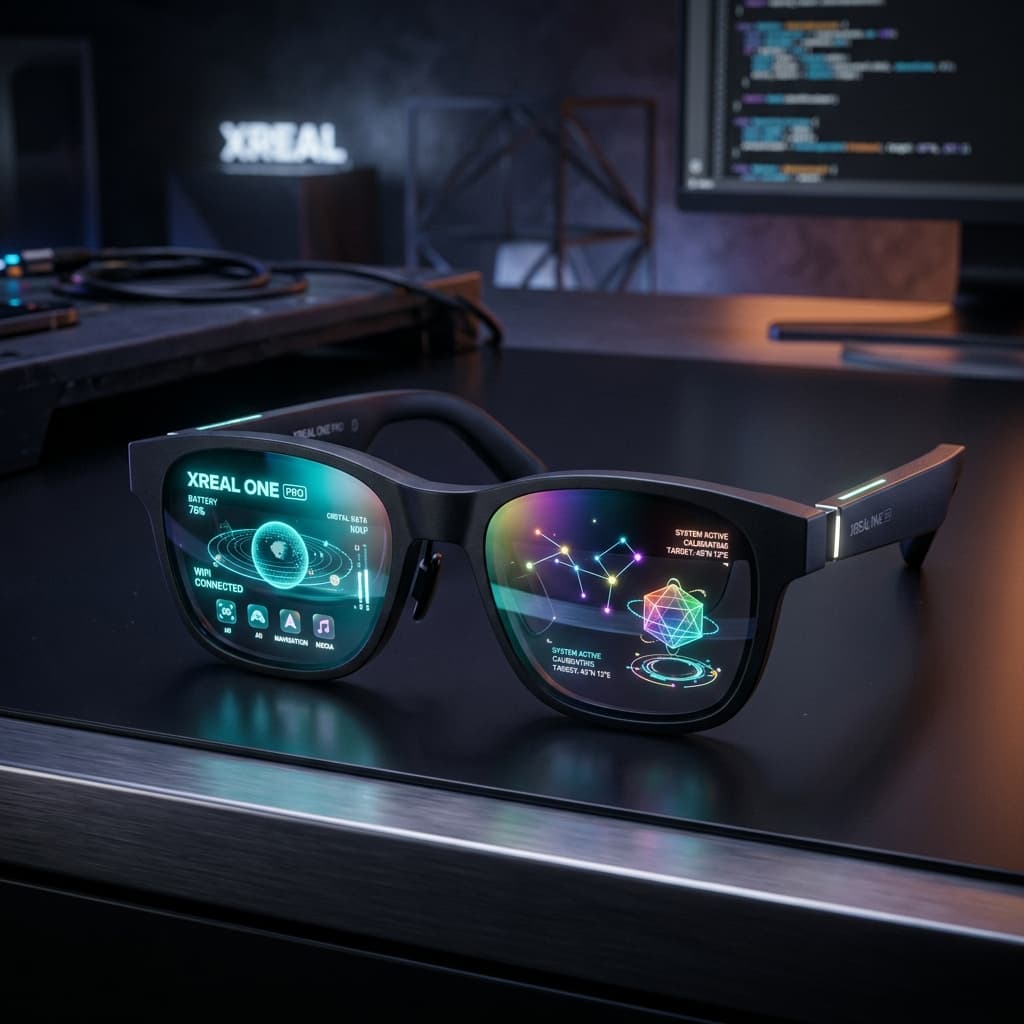
XREAL One Pro
Virtual-monitor glasses at $499, aimed at working on a laptop without the laptop's screen size.
Where it wins, where it doesn't
Pros
- Large virtual displays that hold their position
- Mature Windows and macOS software
- Solves a real problem for laptop-bound work in transit
Cons
- Text sharpness falls short of a real high-resolution panel
- Comfort limits sessions to an hour or two
- Needs a compatible port or an adapter on some machines
Specifications
- Display0.55-inch Sony Micro-OLED
- Accessibility—
- AudioAcoustic components specially designed for AR glasses, professionally tuned by BOSE
- Built-in Apps—
- Camera—
- Capacity—
- Chips—
- Color AccuracyΔE<3
- CompatibilityiPhone, iPad, Android, PC, Xbox, Steam Deck, Switch, Play Station 5, Mac, Drone Controller, ROG Ally
- Device Weight—
- DoF0 DoF, Native 3 DoF, Anchor Mode enables both 3DoF and 6DoF spatial anchoring
- Dynamic Frame Interpolationup to 120 fps
- FOV57°
- Image Correctioncompensating and displaying each line simultaneously
- Interpupillary Distance (IPD)—
- IPD Compatibility57-66 mm & 66-75 mm
- key_features—
- Lens Transparencythree levels of electronichromic (Theater Mode, Shade Mode, Clear Mode)
- M2P Latency3 ms
- Operating System—
- Refresh Rate120 Hz
- Screen Sizeup to a 171 inch screen
- Sensors—
- Stabilization Algorithmself-Developed stabilization algorithm
- Supported Input Accessories—
- Supported Spatial Accessories—
- Wireless—
- X1 ChipThe Only Spatial Computing Chip on AR Glasses