
Minisforum MS-S1 Max
Verdict
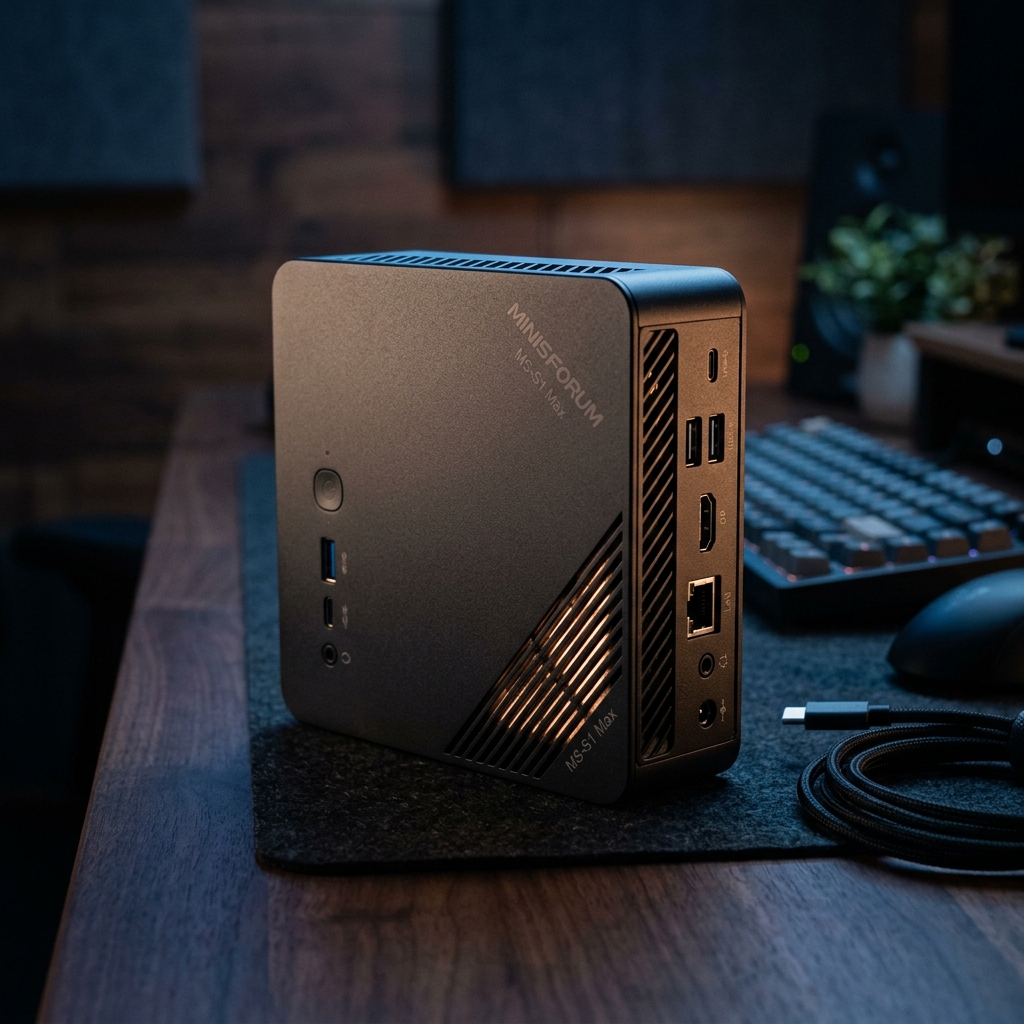
AMD Strix Halo in a mini-PC, with 128GB of soldered LPDDR5x unified memory.
Where it wins, where it doesn't
Pros
- 128GB unified memory in a mini-PC chassis
- Runs models that would otherwise need multiple GPUs
- Low power draw for the capability
Cons
- Memory is soldered — no upgrade path
- Token generation well below a discrete GPU
- Pointless for models that already fit in consumer VRAM
Editorial note
AMD's answer to the unified-memory argument Apple has been winning, and it lands in a chassis you can put in a bag. A hundred and twenty-eight gigabytes addressable by the accelerator means models that would need a multi-GPU rig run on a single small machine drawing a fraction of the power. The catch is the one that always applies to this architecture: bandwidth and compute are well below a discrete GPU, so you are trading tokens per second for the ability to load the model at all. On a 70B-class model that trade is obviously worth it; on a 13B model that already fits in a 5070 Ti, it is obviously not. The memory is soldered, so the configuration you buy is the configuration you keep.
In-Depth Review
AMD's Strix Halo answer to the unified-memory argument Apple has been winning — and it lands in a chassis small enough to put in a bag. 128GB of soldered LPDDR5x addressable by the accelerator means models that would otherwise need a multi-GPU rig run on one small machine drawing a fraction of the power.
The architectural trade, again
The catch is the one that always applies here: memory bandwidth and compute sit well below a discrete GPU, so you are trading tokens per second for the ability to load the model at all.
- On a 70B-class model, that trade is obviously worth it — nothing else this size and this quiet will run it.
- On a 13B model that already fits in a 5070 Ti's 16GB, it is obviously not — the discrete card generates far faster.
The trade-offs
- Soldered memory. The configuration you buy is the configuration you keep — no upgrade path.
- Speed. Acceptable for interactive use on large models; not for high-throughput serving.
Who should buy
Edge deployments that need a large model in a small box, local open-model work where capacity beats speed, and buyers who want serious capability without a tower. If your target models already fit in consumer VRAM, buy the GPU instead.
Frequently Asked Questions
Who is Minisforum MS-S1 Max for?↓
What are the drawbacks of Minisforum MS-S1 Max?↓
What does Minisforum MS-S1 Max do well?↓
How much does Minisforum MS-S1 Max cost?↓
What is the Fathom Layer design score for Minisforum MS-S1 Max?↓
Alternatives to consider
See all alternatives →Further reading
Featured badge
Building this product? Add the badge to your site to show it’s in the index.

<a href="https://fathomlayer.com/compute/local-ai-workstations/minisforum-ms-s1-max" target="_blank" rel="noopener noreferrer"><img src="https://fathomlayer.com/fathom-badge.svg" alt="Featured on Fathom Layer" width="250" height="54" /></a>