
Versus Engine
Ray-Ban Meta (Gen 3) vs XREAL One Pro
Recorded specs, strengths and limitations for Ray-Ban Meta (Gen 3) and XREAL One Pro, side by side. Check the evidence and your requirements before deciding.
Pricing
Not verified here
Current prices and availability are not verified in this summary. Check regional offers and required accessories before buying.
Recorded design scores
Ray-Ban Meta (Gen 3): Not recorded · XREAL One Pro: 9.0
Editorial design scores are not performance benchmarks or proof of suitability. Review the full records and your requirements.
Feature notes on record
- Ray-Ban Meta (Gen 3): 12 MP ultra-wide camera
- XREAL One Pro: Large virtual displays that hold their position
Ray-Ban Meta (Gen 3)
Ray-Ban Meta (Gen 3) is a smart glasses device with 12 MP ultra-wide camera.
Where it wins, where it doesn't
Pros
- High-resolution 12 MP ultra-wide camera
- Prescription compatibility with a wide range
- Up to 50 additional hours of battery life with charging case
Cons
- Limited battery life of 9 hours on a single charge
Specifications
- Audio—
- Color Accuracy—
- Compatibility—
- Display—
- DoF—
- Dynamic Frame Interpolation—
- FOV—
- Image Correction—
- IPD Compatibility—
- Lens Transparency—
- M2P Latency—
- Refresh Rate—
- Screen Size—
- Stabilization Algorithm—
- X1 Chip—
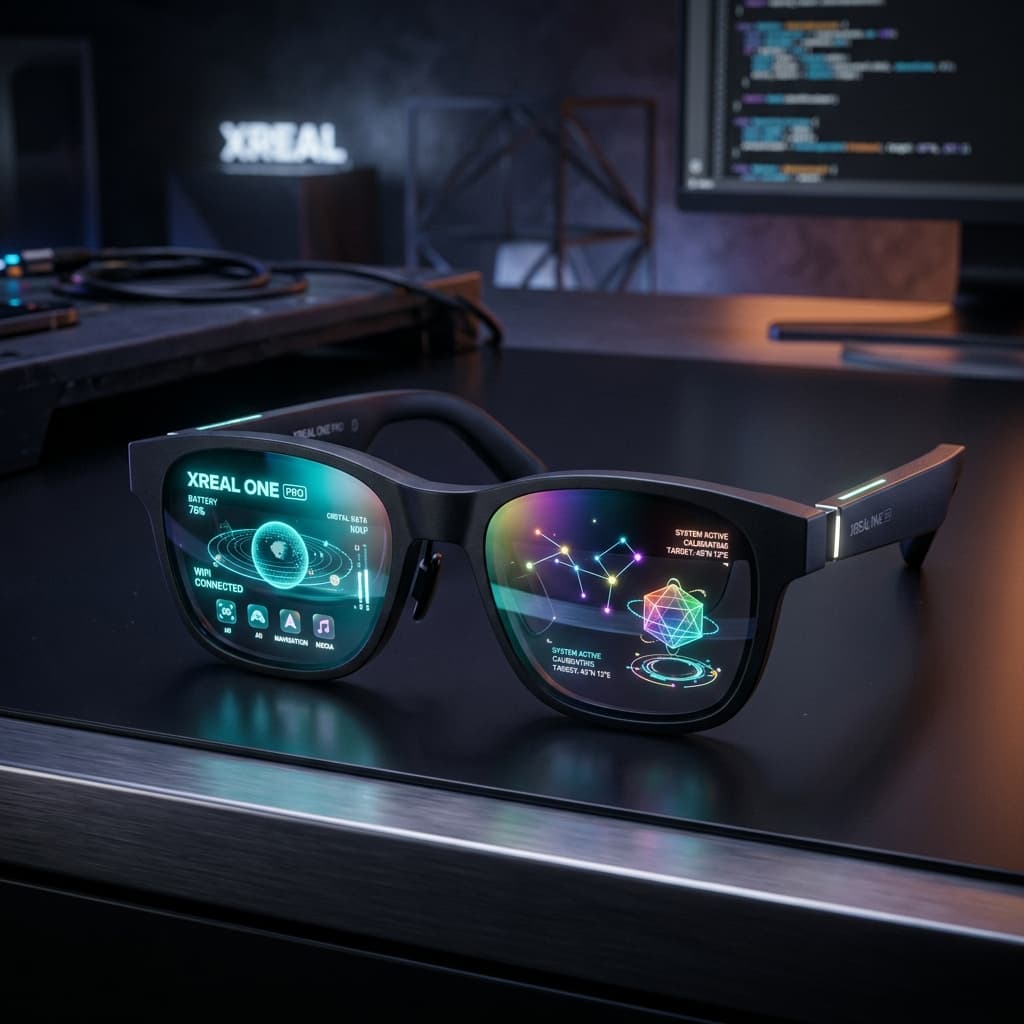
XREAL One Pro
Where it wins, where it doesn't
Pros
- Large virtual displays that hold their position
- Mature Windows and macOS software
- Solves a real problem for laptop-bound work in transit
Cons
- Text sharpness falls short of a real high-resolution panel
- Comfort limits sessions to an hour or two
- Needs a compatible port or an adapter on some machines
Specifications
- AudioAcoustic components specially designed for AR glasses, professionally tuned by BOSE
- Color AccuracyΔE<3
- CompatibilityiPhone, iPad, Android, PC, Xbox, Steam Deck, Switch, Play Station 5, Mac, Drone Controller, ROG Ally
- Display0.55-inch Sony Micro-OLED
- DoF0 DoF, Native 3 DoF, Anchor Mode enables both 3DoF and 6DoF spatial anchoring
- Dynamic Frame Interpolationup to 120 fps
- FOV57°
- Image Correctioncompensating and displaying each line simultaneously
- IPD Compatibility57-66 mm & 66-75 mm
- Lens Transparencythree levels of electronichromic (Theater Mode, Shade Mode, Clear Mode)
- M2P Latency3 ms
- Refresh Rate120 Hz
- Screen Sizeup to a 171 inch screen
- Stabilization Algorithmself-Developed stabilization algorithm
- X1 ChipThe Only Spatial Computing Chip on AR Glasses
Specifications
| Specification | Ray-Ban Meta (Gen 3) | XREAL One Pro |
|---|---|---|
| Audio | — | Acoustic components specially designed for AR glasses, professionally tuned by BOSE |
| Color Accuracy | — | ΔE<3 |
| Compatibility | — | iPhone, iPad, Android, PC, Xbox, Steam Deck, Switch, Play Station 5, Mac, Drone Controller, ROG Ally |
| Display | — | 0.55-inch Sony Micro-OLED |
| DoF | — | 0 DoF, Native 3 DoF, Anchor Mode enables both 3DoF and 6DoF spatial anchoring |
| Dynamic Frame Interpolation | — | up to 120 fps |
| FOV | — | 57° |
| Image Correction | — | compensating and displaying each line simultaneously |
| IPD Compatibility | — | 57-66 mm & 66-75 mm |
| Lens Transparency | — | three levels of electronichromic (Theater Mode, Shade Mode, Clear Mode) |
| M2P Latency | — | 3 ms |
| Refresh Rate | — | 120 Hz |
| Screen Size | — | up to a 171 inch screen |
| Stabilization Algorithm | — | self-Developed stabilization algorithm |
| X1 Chip | — | The Only Spatial Computing Chip on AR Glasses |
More comparisons in this category
Questions about Ray-Ban Meta (Gen 3) vs XREAL One Pro
- What is the difference between Ray-Ban Meta (Gen 3) and XREAL One Pro?
- On record, Ray-Ban Meta (Gen 3)'s main strength is: High-resolution 12 MP ultra-wide camera. XREAL One Pro's is: Large virtual displays that hold their position.
- What are the downsides of Ray-Ban Meta (Gen 3) and XREAL One Pro?
- Ray-Ban Meta (Gen 3): Limited battery life of 9 hours on a single charge. XREAL One Pro: Text sharpness falls short of a real high-resolution panel.