Skild AI Launches S1 Robot Foundation Model Using NVIDIA Technologies
Skild AI has launched the S1 robot foundation model, which can learn new tasks from a single video demonstration, thanks to NVIDIA's Physical AI technologies.

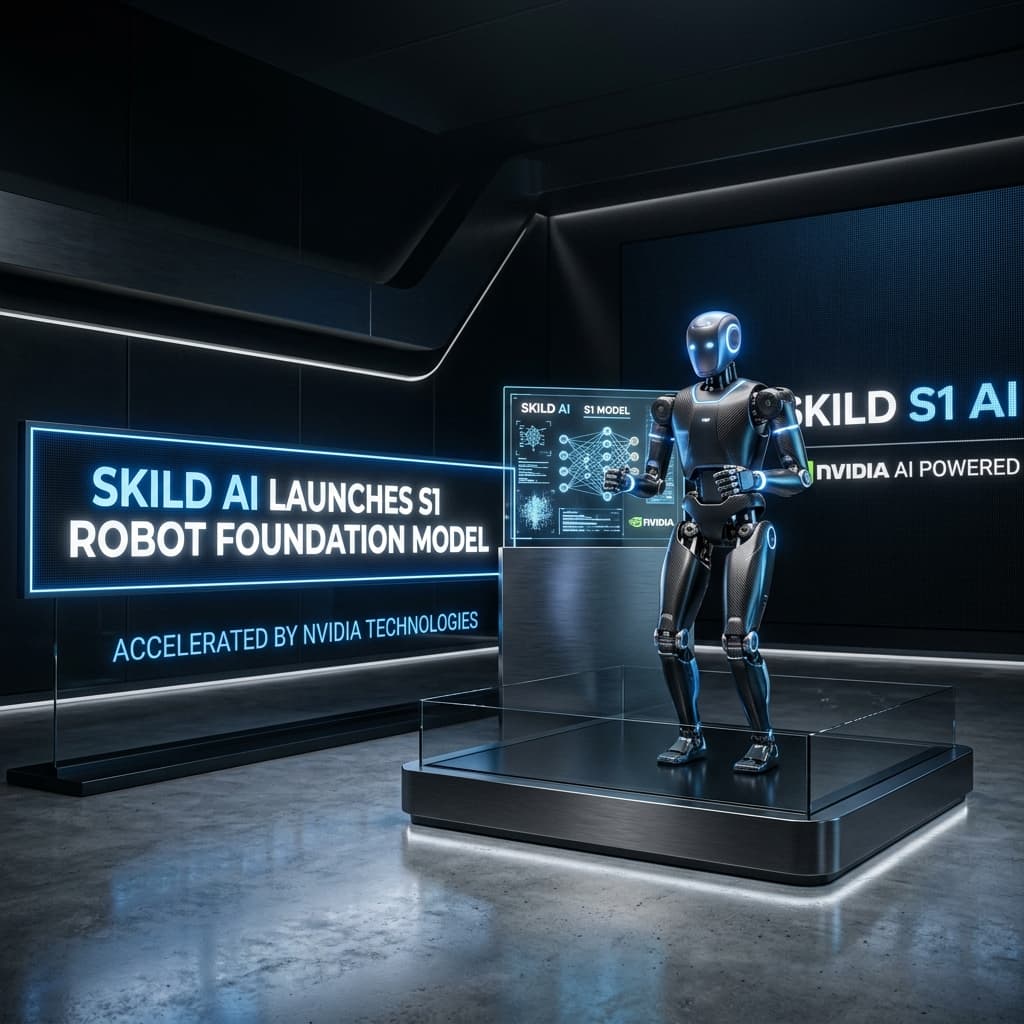
Skild AI has launched the S1 robot foundation model, which can learn new tasks from a single video demonstration, thanks to NVIDIA's Physical AI technologies. The model, unveiled last week, uses video as input to understand and execute tasks without retraining, a technique called in-context learning. This approach is designed to address the challenge of reprogramming robots when tasks change or new products arrive in dynamic environments like manufacturing floors and warehouses.
Skild AI built S1 and conducted the research on NVIDIA AI infrastructure, leveraging technologies such as synthetic data generation, model training, simulation, and real-world deployment. Deepak Pathak, cofounder and CEO of Skild AI, emphasized the importance of learning by experience in robotics. NVIDIA Isaac Lab and NVIDIA Cosmos technologies have been instrumental in creating the scalable, diverse experience needed for robots to learn across various scenarios and embodiments.
The company reached a $100 million annual revenue run rate just 10 months after its first commercial deployment. Skild has built over 60 deployment partnerships, covering applications in manufacturing, logistics, inspection, security, and food preparation. S1 demonstrates the potential of showing a robot a single video example to learn a new task, which can be as effective as providing it with 380 hands-on training examples.
In collaboration with Foxconn, Skild, NVIDIA, and Foxconn are deploying the Skild Brain on dual-arm manipulators for high-precision assembly of NVIDIA Blackwell systems. This deployment showcases the robot's ability to install components, fasten screws, and adapt to disturbances across multistep tasks. NVIDIA's technologies, including Omniverse libraries and Isaac Sim framework, have been crucial in training and validating the robot brain before real-world deployment.
Source: nvidia-newsroom
