
Oura Ring Gen 3
Verdict
The finger-worn tracker that made continuous health monitoring socially wearable — with a subscription attached.
Where it wins, where it doesn't
Pros
- Finger-based PPG provides drastically clearer signals than wrist trackers
- NTC thermistors track illness onset via 0.1°C temperature variance
- Titanium shell withstands deep water and extreme elements
Cons
- Full data access locked behind a mandatory monthly subscription
- Bulky form factor on smaller hands
- Lacks real-time vibration or notification haptics
Specifications
| Weight | 4g to 6g |
|---|---|
| Battery | 15mAh to 22mAh Lipo (Up to 7 days) |
| Sensors | Red/Green/IR PPG, NTC temperature, 3D accelerometer |
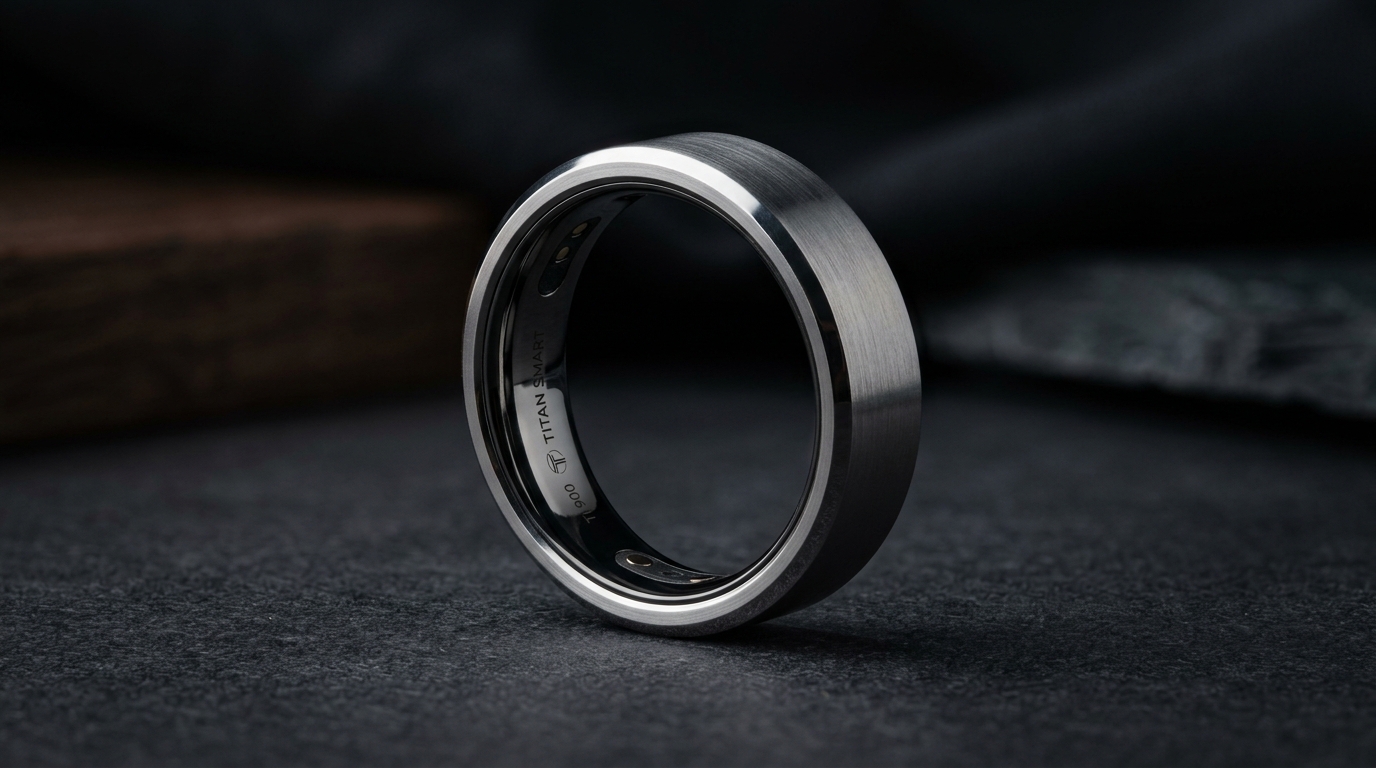
| Materials | Titanium shell with PVD coating, non-allergenic inner molding |
| Connectivity | Bluetooth Low Energy (BLE) |
| Water Resistance | Up to 100 meters (10 ATM) |
| Temperature Precision | 0.1°C variance detection |
Editorial note
Reading from a finger rather than a wrist is not a marketing distinction: the arteries are closer to the surface and the sensor moves less, so the pulse signal is materially cleaner than any wrist tracker produces. That is why Oura's sleep staging is trusted where wrist data is treated as indicative. The temperature thermistors add something genuinely useful — a tenth of a degree of sustained deviation often precedes symptoms by a day, which is information nothing else on your body gives you. The subscription is the argument against, and it is a real one: you have bought the sensors and you still pay monthly to read them, which competitors like RingConn and Circular have correctly identified as an opening. It is also thicker than it photographs, and it cannot buzz — there are no haptics, so it tracks rather than tells.
In-Depth Review
Reading a pulse from a finger rather than a wrist is a physical advantage, not a marketing line: the arteries sit closer to the surface and the sensor barely moves, so the PPG signal is materially cleaner than any wrist tracker produces. That is why Oura's sleep staging is treated as trustworthy where wrist data is treated as a hint.
What the sensors deliver
The Gen 3 carries red, green and infrared PPG, a 3D accelerometer, and — the genuinely differentiated part — NTC thermistors that resolve temperature changes to 0.1°C. A sustained deviation of a tenth of a degree often shows up a day before symptoms do, which is information nothing else on your body gives you. The titanium shell is rated to 100 metres, and the battery runs up to seven days.
The trade-offs
| Strength | Cost |
|---|---|
| Cleanest consumer sleep and recovery data | Full data locked behind a mandatory monthly subscription |
| Wearable anywhere, all day, even swimming | Thicker in person than in photos; awkward on smaller hands |
| Seven-day battery | No haptics — it tracks, it cannot notify |
The subscription is the real argument against. You have already bought the sensors and still pay monthly to read them, which is exactly the opening RingConn and Circular have moved into.
Who should buy
Anyone optimising sleep and recovery who does not want a watch on their wrist, and data-driven athletes who will use the readiness signals. If a one-time purchase matters more than peak signal quality, look at the subscription-free alternatives first.
Frequently Asked Questions
Who is Oura Ring Gen 3 for?↓
What are the drawbacks of Oura Ring Gen 3?↓
What does Oura Ring Gen 3 do well?↓
How much does Oura Ring Gen 3 cost?↓
What is the Fathom Layer design score for Oura Ring Gen 3?↓
Alternatives to consider
See all alternatives →Further reading
Featured badge
Building this product? Add the badge to your site to show it’s in the index.

<a href="https://fathomlayer.com/ecosystem/wearables/oura-ring-gen-3" target="_blank" rel="noopener noreferrer"><img src="https://fathomlayer.com/fathom-badge.svg" alt="Featured on Fathom Layer" width="250" height="54" /></a>