
Valve
Steam Deck OLED
Valve's handheld PC at $549, now with an HDR OLED panel and materially better battery life.
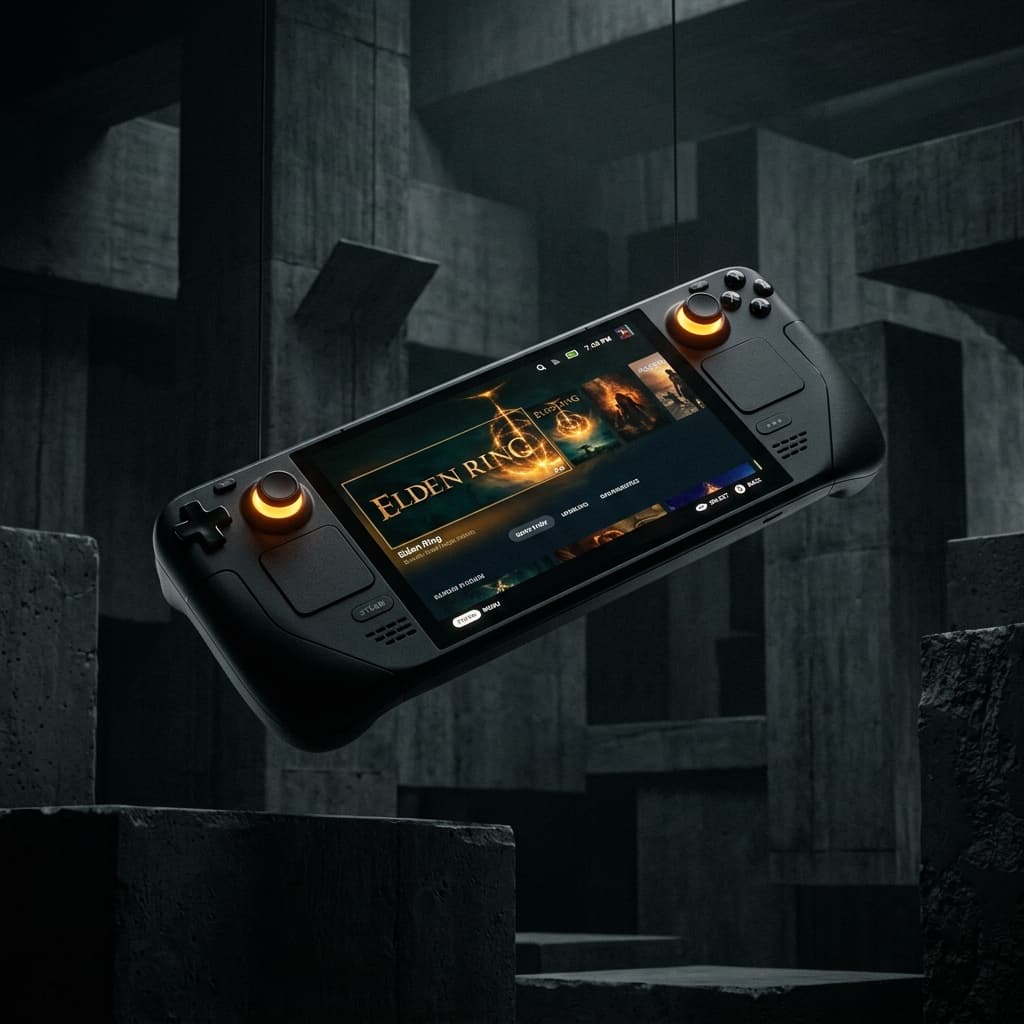
- Key Features
- 7.4-inch HDR OLED display, 6nm AMD APU, 16GB LPDDR5, 50Wh battery
The decision
Where it wins
- Beautiful HDR OLED screen
- Greatly improved battery life
- Built-in Steam library integration
Where it doesn't
- Cannot run the most demanding AAA games at 60fps
- Linux OS has compatibility hurdles with some anti-cheat
- Bulky footprint
Specifications
Structured product data, grouped by system.
Other specifications01
| Key Features | 7.4-inch HDR OLED display, 6nm AMD APU, 16GB LPDDR5, 50Wh battery |
|---|
Read the record
The OLED revision fixed the two things people actually complained about — the screen and the battery — and in doing so turned a compelling device into an easy recommendation. What makes the Deck different from every other handheld is not the hardware but that it is a real PC running your existing Steam library, so the cost of entry is the device rather than repurchasing games. Emulation and indie titles run beautifully. Set expectations correctly on the demanding end: recent AAA games run, but often at settings and frame rates that are a compromise rather than a triumph, and Linux's anti-cheat situation means a handful of competitive multiplayer titles simply will not launch. Check the specific games you care about against ProtonDB before buying, not after.
The OLED revision fixed the two things people actually complained about — the screen and the battery — and turned a compelling device into an easy recommendation. The 7.4-inch HDR OLED panel is genuinely lovely, and the 50Wh battery lasts long enough to matter on a flight.
What makes the Deck different
It is not the hardware — it is that this is a real PC running your existing Steam library. The cost of entry is the device, not repurchasing games, and emulation and indie titles run beautifully on the 6nm AMD APU with 16GB of LPDDR5.
Set expectations on the demanding end
- Recent AAA games run, but often at settings and frame rates that are a compromise rather than a triumph.
- Linux's anti-cheat situation means a handful of competitive multiplayer titles simply will not launch.
- The footprint is bulky next to a Switch-class handheld.
Check the specific games you care about against ProtonDB before buying, not after.
Who should buy
PC gamers who travel, emulation enthusiasts, and anyone with a large existing Steam library. If your play is mostly current-gen AAA at high settings, a more powerful (and pricier) Windows handheld is the better fit.
Frequently Asked Questions
Who is Steam Deck OLED for?↓
What are the drawbacks of Steam Deck OLED?↓
What does Steam Deck OLED do well?↓
How much does Steam Deck OLED cost?↓
What is the Fathom Layer design score for Steam Deck OLED?↓
Alternatives to consider
See all alternatives →- Another option PlayStation 5 Pro
Best console graphics available
Explore its evidenceDesign score 8.7/10 - Another option Xbox Series X
Offers 16GB of GDDR6 memory with high bandwidth for smooth gaming experiences.
Explore its evidence - Another option ROG Xbox Ally X20
Powerful AMD Ryzen AI Z2 Extreme processor with 24GB LPDDR5X memory and 1TB PCIe 4.0 NVMe SSD
24GB LPDDR5X on board Support dual channel memory
Further reading
- How to build a local AI server with used GPUs: the RTX 3090 & Tesla P40 guideGuide
- Building a Tesla P40 rig for local AI: what you're really signing up forGuide
- Running and fine-tuning open models on Windows (WSL2, DirectML, CUDA)Guide
- Optimising local LLM inference: where the bottleneck actually isGuide
Featured badge
Building this product? Add the badge to your site to show it’s in the index.

<a href="https://fathomlayer.com/compute/gaming-consoles/steam-deck-oled" target="_blank" rel="noopener noreferrer"><img src="https://fathomlayer.com/fathom-badge.svg" alt="Featured on Fathom Layer" width="250" height="54" /></a>