
Versus Engine
Steam Deck OLED vs Xbox Series X
Recorded specs, strengths and limitations for Steam Deck OLED and Xbox Series X, side by side. Check the evidence and your requirements before deciding.
Pricing
Not verified here
Current prices and availability are not verified in this summary. Check regional offers and required accessories before buying.
Recorded design scores
Steam Deck OLED: 9.1 · Xbox Series X: Not recorded
Editorial design scores are not performance benchmarks or proof of suitability. Review the full records and your requirements.
Feature notes on record
- Steam Deck OLED: Beautiful HDR OLED screen
- Xbox Series X: 1TB Custom NVMe SSD
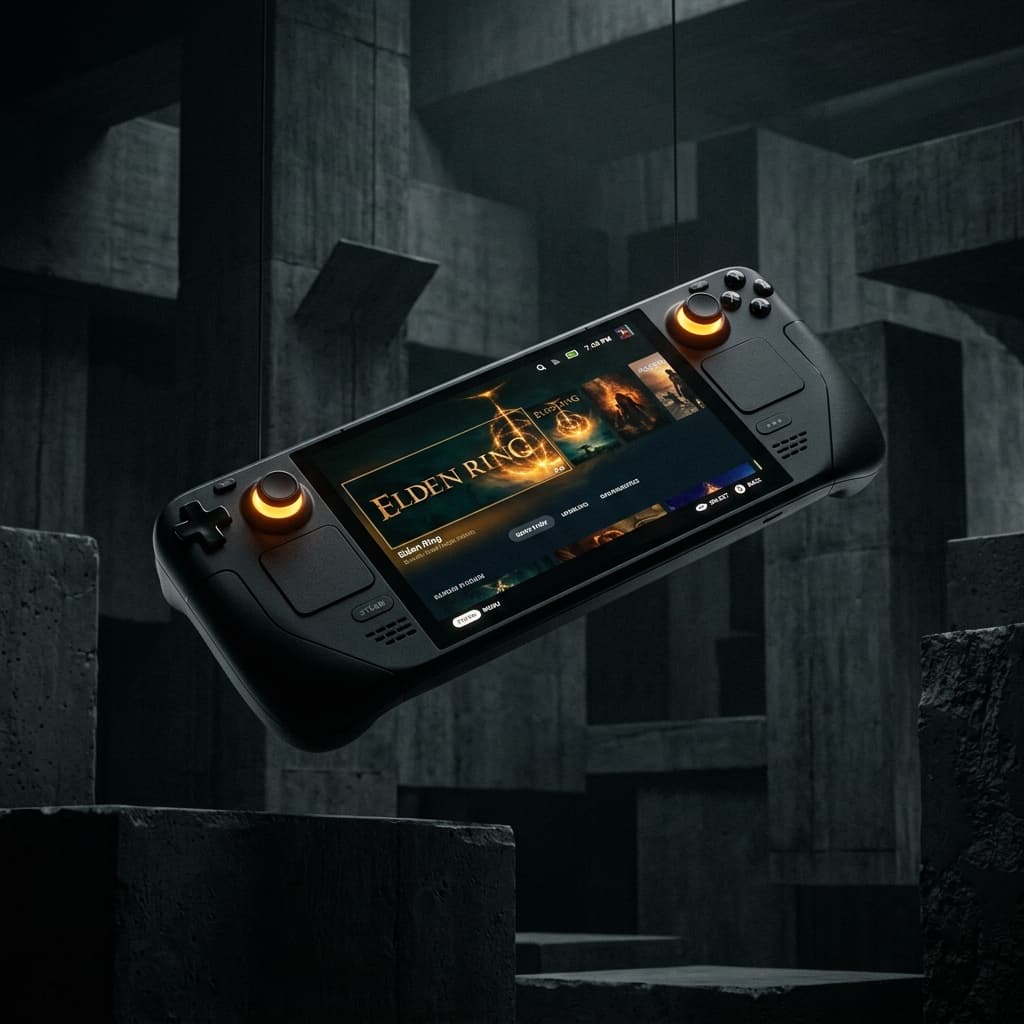
Steam Deck OLED
Where it wins, where it doesn't
Pros
- Beautiful HDR OLED screen
- Greatly improved battery life
- Built-in Steam library integration
Cons
- Cannot run the most demanding AAA games at 60fps
- Linux OS has compatibility hurdles with some anti-cheat
- Bulky footprint
Specifications
- Dimensions / Dimensions—
- key_features7.4-inch HDR OLED display, 6nm AMD APU, 16GB LPDDR5, 50Wh battery
- Memory & Storage / Expandable storage—
- Memory & Storage / I/O throughput—
- Memory & Storage / Internal storage—
- Memory & Storage / Memory—
- Memory & Storage / Memory bandwidth—
- Ports & Connectivity / Accessories radio—
- Ports & Connectivity / Ethernet—
- Ports & Connectivity / HDMI—
- Ports & Connectivity / USB—
- Processor / CPU—
- Processor / GPU—
- Processor / Process—
- Processor / SOC Die Size—
- Sound Capabilities / Dolby Digital—
- Sound Capabilities / Dolby TrueHD—
- Sound Capabilities / DTS—
- Video Capabilities / HDMI features—
- Video Capabilities / High Dynamic Range—
- Video Capabilities / Optical Drive—
- Weight / Weight—
Xbox Series X
Xbox Series X is a high-performance gaming console with 1TB of custom NVMe SSD storage and 16GB of GDDR6 memory.
Where it wins, where it doesn't
Pros
- Offers 16GB of GDDR6 memory with high bandwidth for smooth gaming experiences.
- Supports up to 1TB of expandable storage via 1TB Storage Expansion Cards.
- Includes a dedicated dual band Xbox Wireless radio for seamless connectivity.
Cons
- The console is relatively heavy and bulky, weighing 9.8 lbs (4.4kg) and measuring 5.94 x 5.94 x 11.85 in (15.1 x 15.1 x 30.1cm).
Specifications
- Dimensions / Dimensions5.94 x 5.94 x 11.85 in (15.1 x 15.1 x 30.1cm)
- key_features—
- Memory & Storage / Expandable storageSupport for 1TB Storage Expansion Cards for XBOX Series X|S matches internal storage exactly (sold separately). Support for USB 3.1 external HDD (sold separately)
- Memory & Storage / I/O throughput2.4 GB/s (Raw), 4.8 GB/s (Compressed, with custom hardware decompression block)
- Memory & Storage / Internal storage1TB Custom NVME SSD
- Memory & Storage / Memory16GB GDDR6 w/320 bit-wide bus
- Memory & Storage / Memory bandwidth10GB @ 560 GB/s, 6GB @ 336 GB/s
- Ports & Connectivity / Accessories radioDedicated dual band XBOX Wireless radio
- Ports & Connectivity / Ethernet802.3 10/100/1000
- Ports & Connectivity / HDMI1x HDMI 2.1 port
- Ports & Connectivity / USB3x USB 3.1 Gen 1 ports
- Processor / CPU8X Cores @ 3.8 GHz ( 3.6 GHz w/SMT) Custom Zen 2 CPU
- Processor / GPU12 TFLOPS, 52 CUs @1.825 GHz Custom RDNA 2 GPU
- Processor / Process7nm Enhanced
- Processor / SOC Die Size360.45 mm
- Sound Capabilities / Dolby Digital5.1
- Sound Capabilities / Dolby TrueHDwith Atmos
- Sound Capabilities / DTS5.1
- Video Capabilities / HDMI featuresAuto Low Latency Mode. HDMI Variable Refresh Rate. AMD FreeSync.
- Video Capabilities / High Dynamic RangeUp to 8K HDR
- Video Capabilities / Optical Drive4K UHD Blu-Ray
- Weight / Weight9.8 lbs (4.4kg)
Specifications
| Specification | Steam Deck OLED | Xbox Series X |
|---|---|---|
| Dimensions / Dimensions | — | 5.94 x 5.94 x 11.85 in (15.1 x 15.1 x 30.1cm) |
| key_features | 7.4-inch HDR OLED display, 6nm AMD APU, 16GB LPDDR5, 50Wh battery | — |
| Memory & Storage / Expandable storage | — | Support for 1TB Storage Expansion Cards for XBOX Series X|S matches internal storage exactly (sold separately). Support for USB 3.1 external HDD (sold separately) |
| Memory & Storage / I/O throughput | — | 2.4 GB/s (Raw), 4.8 GB/s (Compressed, with custom hardware decompression block) |
| Memory & Storage / Internal storage | — | 1TB Custom NVME SSD |
| Memory & Storage / Memory | — | 16GB GDDR6 w/320 bit-wide bus |
| Memory & Storage / Memory bandwidth | — | 10GB @ 560 GB/s, 6GB @ 336 GB/s |
| Ports & Connectivity / Accessories radio | — | Dedicated dual band XBOX Wireless radio |
| Ports & Connectivity / Ethernet | — | 802.3 10/100/1000 |
| Ports & Connectivity / HDMI | — | 1x HDMI 2.1 port |
| Ports & Connectivity / USB | — | 3x USB 3.1 Gen 1 ports |
| Processor / CPU | — | 8X Cores @ 3.8 GHz ( 3.6 GHz w/SMT) Custom Zen 2 CPU |
| Processor / GPU | — | 12 TFLOPS, 52 CUs @1.825 GHz Custom RDNA 2 GPU |
| Processor / Process | — | 7nm Enhanced |
| Processor / SOC Die Size | — | 360.45 mm |
| Sound Capabilities / Dolby Digital | — | 5.1 |
| Sound Capabilities / Dolby TrueHD | — | with Atmos |
| Sound Capabilities / DTS | — | 5.1 |
| Video Capabilities / HDMI features | — | Auto Low Latency Mode. HDMI Variable Refresh Rate. AMD FreeSync. |
| Video Capabilities / High Dynamic Range | — | Up to 8K HDR |
| Video Capabilities / Optical Drive | — | 4K UHD Blu-Ray |
| Weight / Weight | — | 9.8 lbs (4.4kg) |
Questions about Steam Deck OLED vs Xbox Series X
- What is the difference between Steam Deck OLED and Xbox Series X?
- On record, Steam Deck OLED's main strength is: Beautiful HDR OLED screen. Xbox Series X's is: Offers 16GB of GDDR6 memory with high bandwidth for smooth gaming experiences.
- What are the downsides of Steam Deck OLED and Xbox Series X?
- Steam Deck OLED: Cannot run the most demanding AAA games at 60fps. Xbox Series X: The console is relatively heavy and bulky, weighing 9.8 lbs (4.4kg) and measuring 5.94 x 5.94 x 11.85 in (15.1 x 15.1 x 30.1cm).