
Versus Engine
Nvidia GeForce RTX 3090 (Usada) vs Ryzen 5 + RTX 4060 Ti Build
Specs, price and the one trade-off that actually decides it — Nvidia GeForce RTX 3090 (Usada) against Ryzen 5 + RTX 4060 Ti Build, side by side.
Cheaper to start
Tie
Both start at a similar price.
Rated higher
Nvidia GeForce RTX 3090 (Usada)
8.5 vs 7.5 on our design scale.
Standout
Nvidia GeForce RTX 3090 (Usada)
24GB VRAM at roughly $600 — unmatched cost per gigabyte
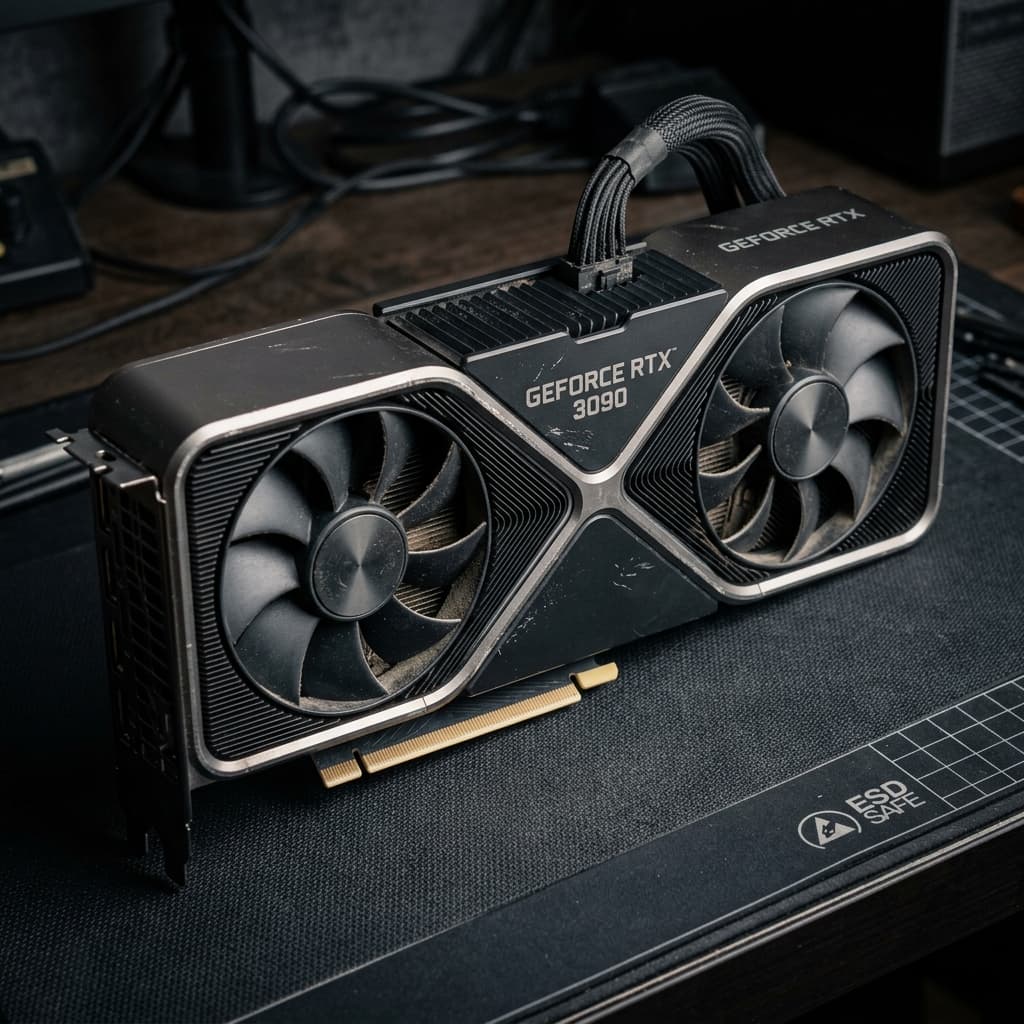
Nvidia GeForce RTX 3090 (Usada)
The second-hand market's favourite: 24GB of VRAM around $600, and the basis of most cheap multi-GPU rigs.
Where it wins, where it doesn't
Pros
- 24GB VRAM at roughly $600 — unmatched cost per gigabyte
- Pairs well for multi-GPU rigs (72GB across three cards)
- Mature, well-understood CUDA support
Cons
- No warranty and unknown usage history
- High power draw that compounds across multiple cards
- Two generations behind on compute and efficiency
Specifications
- cpu—
- gpu—
- tier—
- ram_gb—
- vram_gb—
- example_models—
- tokens_per_second—

Ryzen 5 + RTX 4060 Ti Build
Entry-tier DIY build for local AI: an AMD Ryzen 5 CPU paired with an NVIDIA GeForce RTX 4060 Ti (16 GB VRAM) and 64 GB of system RAM. Runs small models such as Phi-4-mini (3.8B) and Gemma 3 4B at roughly 90 tokens/s — the lowest-cost path in this index to useful local inference.
Where it wins, where it doesn't
Pros
- 16GB VRAM at entry-level pricing
- Accessible upgrade path
- Low power draw (160W GPU limit)
Cons
- Limited to 8B/14B models for fast inference
- Memory bandwidth restricts larger batch sizes
Specifications
- cpuAMD Ryzen 5
- gpuNVIDIA GeForce RTX 4060 Ti
- tierentry
- ram_gb64
- vram_gb16
- example_modelsPhi-4-mini (3.8B), Gemma 3 4B
- tokens_per_second~90