
Versus Engine
NVIDIA RTX Spark Windows PCs vs Radeon RX 9070
Specs, price and the one trade-off that actually decides it — NVIDIA RTX Spark Windows PCs against Radeon RX 9070, side by side.
Cheaper to start
Tie
Both start at a similar price.
Best ecosystem
Tie
Neither lists native integrations.
Standout
NVIDIA RTX Spark Windows PCs
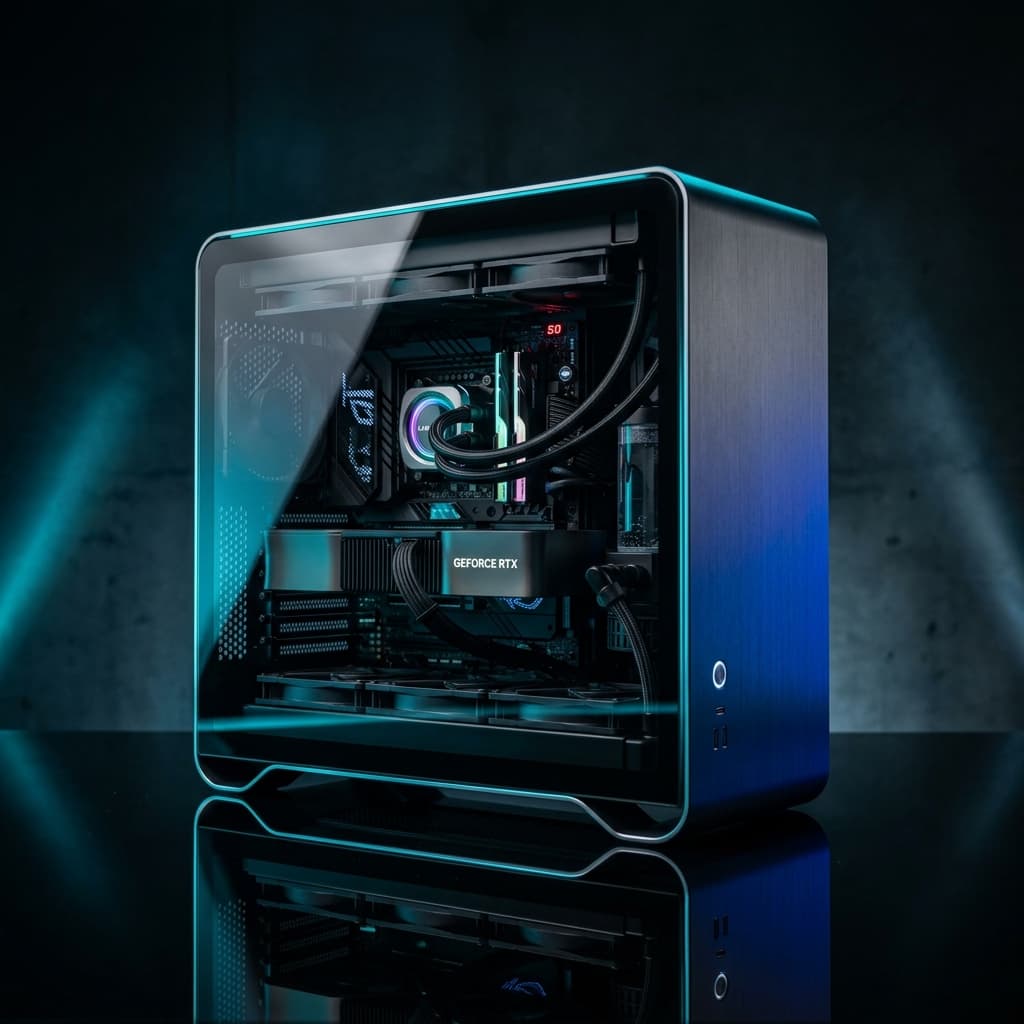
Precision-machined aluminum chassis
NVIDIA RTX Spark Windows PCs
NVIDIA RTX Spark Windows PCs with precision-machined aluminum chassis and tandem OLED displays
Where it wins, where it doesn't
Pros
- Precision-machined aluminum chassis for durability and aesthetic appeal
- Tandem OLED displays with NVIDIA G-SYNC technology for superior visual performance
- Capable of running 120-billion-parameter large language models with 1 million tokens context
Cons
- High price point may limit accessibility for budget-conscious users
Specifications
- achievable frequency—
- ai accelerators—
- bus type—
- chassisprecision-machined aluminum chassis
- displaytandem OLED displays with NVIDIA G-SYNC technology
- displayport™—
- DLSSedit 12K 4:2:2 video with the NVIDIA Blackwell decoder
- DLSS 4.5 Ray Reconstructionfeaturing a second-generation transformer model
- features—
- game frequency—
- gpu memory—
- hdmi™—
- large language modelsrun 120-billion-parameter large language models with 1 million tokens context
- max memory size—
- memory bandwidth—
- memory interface—
- memory speed—
- memory type—
- peak 4-bit precision (int4 matrix) performance—
- peak 8-bit precision (fp8 matrix) performance (e5m2, e4m3)—
- peak 8-bit precision (int8 matrix) performance—
- peak half precision (fp16 matrix) performance—
- peak half precision (fp16 vector) performance—
- peak pixel fill-rate—
- peak single precision (fp32 vector) performance—
- ray accelerators—
- rops—
- RTX Videowith 4x Frame Generation
- size14- to 16-inch sizes
- stream processors—
- supported rendering format—
- thicknessas slim as 14 millimeters
- transistor count—
- typical board power (desktop)—
- weightas light as three pounds
Radeon RX 9070
Radeon RX 9070 graphics card with up to 2520 MHz achievable frequency and 16 GB GDDR6 memory
Where it wins, where it doesn't
Pros
- Achievable frequency of up to 2520 MHz
- 16 GB of GDDR6 memory
- Up to 640 GB/s memory bandwidth
Cons
- Requires a minimum PSU of 650W
- High typical board power of 220W
Specifications
- achievable frequencyUp to 2520 MHz
- ai accelerators112
- bus typePCIe® 5.0 x16
- chassis—
- display—
- displayport™2.1a
- DLSS—
- DLSS 4.5 Ray Reconstruction—
- featuresAMD Software Adrenalin Edition, AMD Fluid Motion Frames, AMD Noise Suppression, AMD Radeon™ Super Resolution, AMD Smart Access Memory, AMD Smart Access Video, AMD Privacy View, AMD Radeon™ Boost, AMD Radeon™ Anti-Lag, AMD Radeon™ Image Sharpening, AMD Enhanced Sync Technology, AMD FreeSync™ Technology, AMD Radeon™ Chill, AMD Virtual Super Resolution, AMD FSR™ 'Redstone'
- game frequency2070 MHz
- gpu memoryAMD Infinity Cache Technology
- hdmi™2.1b
- large language models—
- max memory size16 GB
- memory bandwidthUp to 640 GB/s
- memory interface256-bit
- memory speedUp to 20 Gbps
- memory typeGDDR6
- peak 4-bit precision (int4 matrix) performance578 TOPs
- peak 8-bit precision (fp8 matrix) performance (e5m2, e4m3)289 TFLOPs
- peak 8-bit precision (int8 matrix) performance289 TOPs
- peak half precision (fp16 matrix) performance145 TFLOPs
- peak half precision (fp16 vector) performance36.1 TFLOPs
- peak pixel fill-rateUp to 322.6 GP/s
- peak single precision (fp32 vector) performance36.1 TFLOPs
- ray accelerators56
- rops128
- RTX Video—
- size—
- stream processors3584
- supported rendering formatHDMI™ 4K Support, 4K H264 Decode, 4K H264 Encode, H265/HEVC Decode, H265/HEVC Encode, AV1 Decode, AV1 Encode
- thickness—
- transistor count53.9 B
- typical board power (desktop)220W
- weight—