
Versus Engine
ClawBox vs NVIDIA RTX Spark Windows PCs
Specs, price and the one trade-off that actually decides it — ClawBox against NVIDIA RTX Spark Windows PCs, side by side.
Cheaper to start
Tie
Both start at a similar price.
Rated higher
ClawBox
9.2 vs 0.0 on our design scale.
Standout
ClawBox
Around 20W continuous draw makes always-on genuinely practical
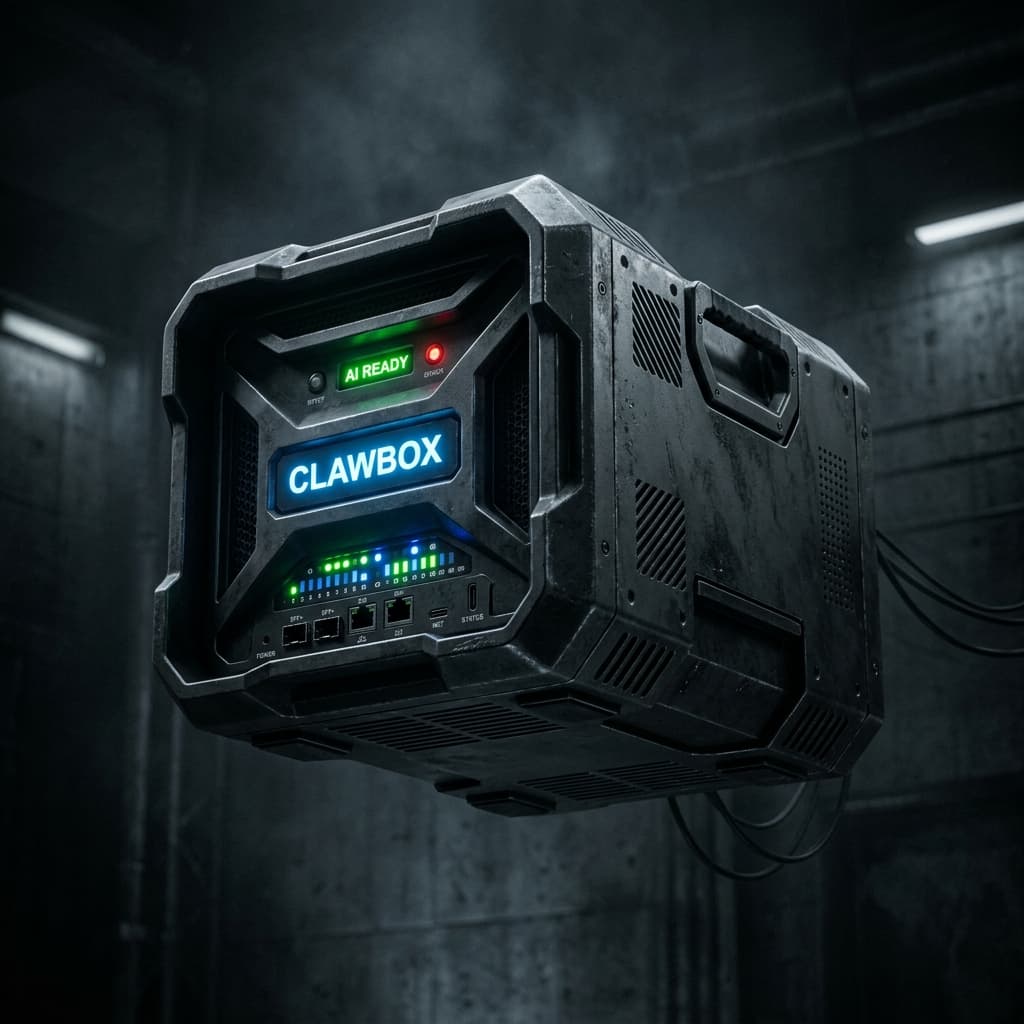
ClawBox
A dedicated 20W AI appliance that runs a local agent continuously, with no discrete GPU.
Where it wins, where it doesn't
Pros
- Around 20W continuous draw makes always-on genuinely practical
- Dedicated appliance, no general-purpose OS to maintain
- Runs entirely locally — nothing leaves the house
Cons
- Locked to its own model rather than anything you want to load
- Requires real networking competence to integrate
- Nowhere near the capability of a local-inference workstation
Specifications
- AI Performance67 TOPS (INT8)
- Architecture64-bit ARMv8.2
- chassis—
- Clock SpeedUp to 1.5 GHz
- Compatible With+ Llama, Mistral, and other LLMs, + Home Assistant integration, + MQTT for IoT devices, + REST APIs and webhooks, + Custom Python skills
- ConnectivityGigabit Ethernet, Wi-Fi 5 (802.11ac), Bluetooth 5.0, 4x USB 3.0, 1x USB-C
- CPU Cores6-core ARM Cortex-A78AE
- CUDA Cores1024
- display—
- DLSS—
- DLSS 4.5 Ray Reconstruction—
- GPUNVIDIA Ampere
- large language models—
- Memory & Storage8GB LPDDR5, 512GB NVMe SSD
- Memory Bandwidth68 GB/s
- Monthly Cost~€2-3 electricity
- Performance Benchmarks / AI Inference<100ms response latency for typical queries
- Performance Benchmarks / Boot Time<60s from power on to ready
- Performance Benchmarks / Memory Usage~4GB typical AI model memory footprint
- Performance Benchmarks / Power Draw12W avg under normal AI workload
- Power7-15W, 20W power adapter (included), 90%+ efficient
- PrecisionFP16, INT8, INT4
- ProcessorNVIDIA Jetson Orin Nano
- RTX Video—
- size—
- thickness—
- weight—
NVIDIA RTX Spark Windows PCs
NVIDIA RTX Spark Windows PCs with precision-machined aluminum chassis and tandem OLED displays
Where it wins, where it doesn't
Pros
- Precision-machined aluminum chassis for durability and aesthetic appeal
- Tandem OLED displays with NVIDIA G-SYNC technology for superior visual performance
- Capable of running 120-billion-parameter large language models with 1 million tokens context
Cons
- High price point may limit accessibility for budget-conscious users
Specifications
- AI Performance—
- Architecture—
- chassisprecision-machined aluminum chassis
- Clock Speed—
- Compatible With—
- Connectivity—
- CPU Cores—
- CUDA Cores—
- displaytandem OLED displays with NVIDIA G-SYNC technology
- DLSSedit 12K 4:2:2 video with the NVIDIA Blackwell decoder
- DLSS 4.5 Ray Reconstructionfeaturing a second-generation transformer model
- GPU—
- large language modelsrun 120-billion-parameter large language models with 1 million tokens context
- Memory & Storage—
- Memory Bandwidth—
- Monthly Cost—
- Performance Benchmarks / AI Inference—
- Performance Benchmarks / Boot Time—
- Performance Benchmarks / Memory Usage—
- Performance Benchmarks / Power Draw—
- Power—
- Precision—
- Processor—
- RTX Videowith 4x Frame Generation
- size14- to 16-inch sizes
- thicknessas slim as 14 millimeters
- weightas light as three pounds