
Versus Engine
Apple Mac Studio (M5 Max/Ultra) vs Snapdragon X Elite Compute Platform
Specs, price and the one trade-off that actually decides it — Apple Mac Studio (M5 Max/Ultra) against Snapdragon X Elite Compute Platform, side by side.
Cheaper to start
Snapdragon X Elite Compute Platform
Starts about $4,499 lower.
Best ecosystem
Tie
Neither lists native integrations.
Standout
Apple Mac Studio (M5 Max/Ultra)
Up to 512GB unified memory
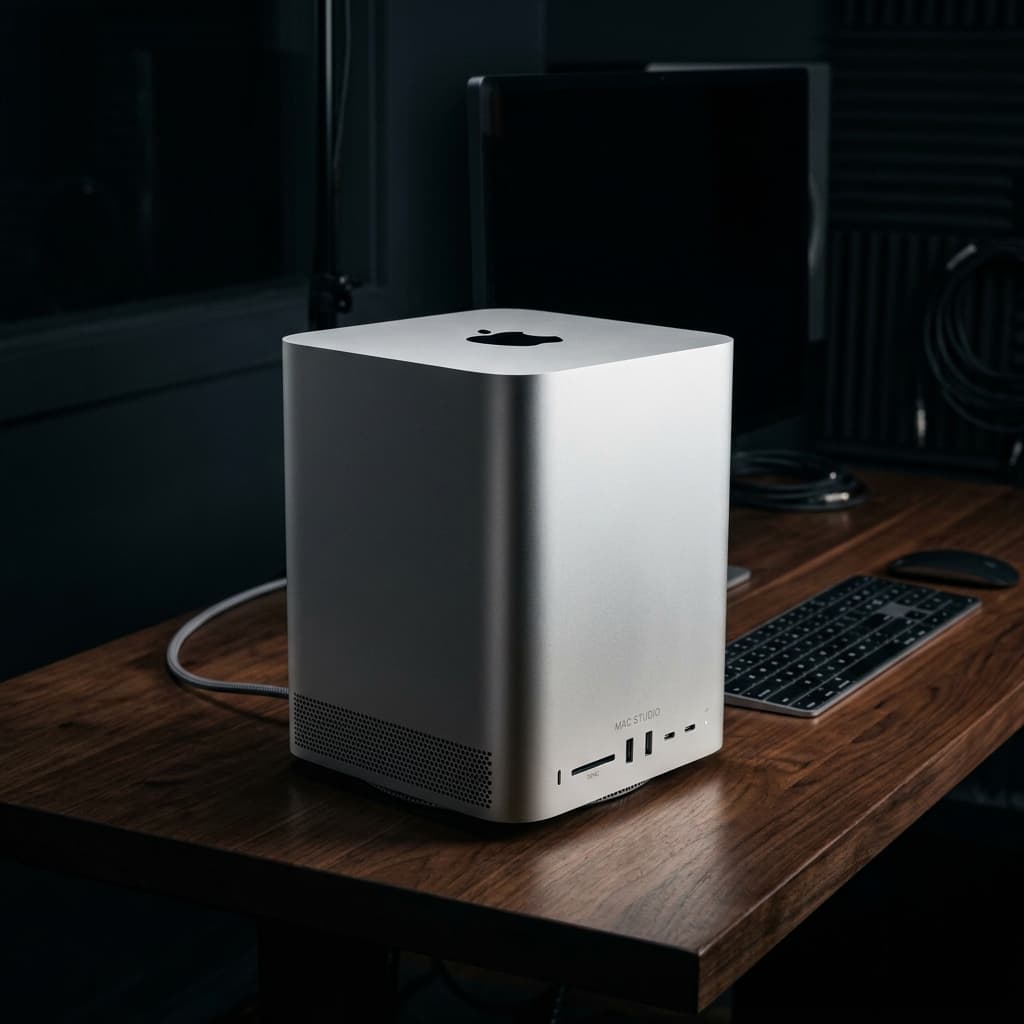
Apple Mac Studio (M5 Max/Ultra)
Extreme performance desktop for pro workflows, supporting up to 512GB of unified memory.
Where it wins, where it doesn't
Pros
- Supports up to 512GB of unified memory for demanding workloads.
- Up to 80-core GPU for exceptional graphics and computational performance.
- Next-generation SSD architecture and twice-as-fast storage performance.
Cons
- High power draw necessitates a specific power supply.
- Expensive at $5499, making it a niche product for professionals.
Specifications
- architecture—
- BluetoothBluetooth 6
- cores—
- CPU36-core
- Displays Supportedup to eight
- GPUup to 80-core
- memoryUp to 512GB Unified
- Memory Bandwidth1.2TB/s
- npu—
- SSD Architecturenext-generation
- Storage Performanceup to twice as fast
- Studio Display XDRup to four at full 5K resolution and 120Hz
- ThunderboltThunderbolt 5
- Thunderbolt 5 Bandwidth120Gb/s
- Unified Memoryup to 512GB
- Wi-FiWi-Fi 7

Snapdragon X Elite Compute Platform
High-performance ARM-based SoC featuring a 45 TOPS NPU for on-device AI.
Where it wins, where it doesn't
Pros
- Exceptional battery life
- Local AI inference capability
Cons
- x86 emulation overhead for legacy apps
Specifications
- architectureARM64
- Bluetooth—
- cores12
- CPU—
- Displays Supported—
- GPU—
- memory—
- Memory Bandwidth—
- npu45 TOPS
- SSD Architecture—
- Storage Performance—
- Studio Display XDR—
- Thunderbolt—
- Thunderbolt 5 Bandwidth—
- Unified Memory—
- Wi-Fi—