
Versus Engine
Apple Mac Studio (M5 Max/Ultra) vs NVIDIA Vera Rubin NVL72
Specs, price and the one trade-off that actually decides it — Apple Mac Studio (M5 Max/Ultra) against NVIDIA Vera Rubin NVL72, side by side.
Cheaper to start
Tie
Both start at a similar price.
Best ecosystem
Tie
Neither lists native integrations.
Standout
Apple Mac Studio (M5 Max/Ultra)
Up to 512GB unified memory
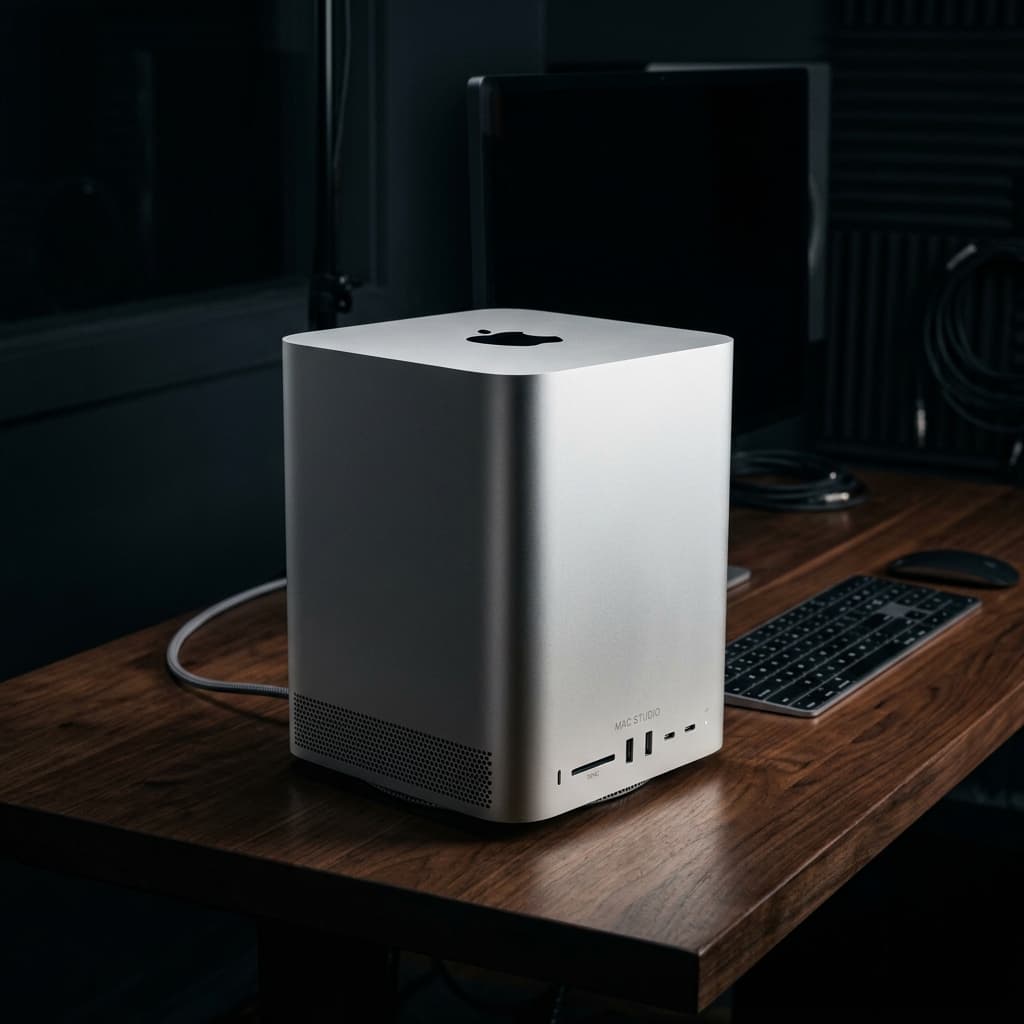
Apple Mac Studio (M5 Max/Ultra)
Extreme performance desktop for pro workflows, supporting up to 512GB of unified memory.
Where it wins, where it doesn't
Pros
- Supports up to 512GB of unified memory for demanding workloads.
- Up to 80-core GPU for exceptional graphics and computational performance.
- Next-generation SSD architecture and twice-as-fast storage performance.
Cons
- High power draw necessitates a specific power supply.
- Expensive at $5499, making it a niche product for professionals.
Specifications
- BluetoothBluetooth 6
- Configuration—
- CPU36-core
- CPU Core Count—
- CPU Memory—
- Displays Supportedup to eight
- FP16/BF16³—
- FP32—
- FP64—
- FP8/FP6 Training³—
- GPUup to 80-core
- GPU Memory | Bandwidth—
- GPUs in 100 MW¹—
- Inlet Temp—
- memoryUp to 512GB Unified
- Memory Bandwidth1.2TB/s
- Networking Bandwidth (Scale-Out)´—
- NVFP4 Inference²—
- NVFP4 Training³—
- NVIDIA NVLink—
- NVLink Bandwidth—
- NVLink-C2C Bandwidth—
- SSD Architecturenext-generation
- Storage Performanceup to twice as fast
- Studio Display XDRup to four at full 5K resolution and 120Hz
- TF32³—
- ThunderboltThunderbolt 5
- Thunderbolt 5 Bandwidth120Gb/s
- Total NVIDIA + HBM4 Chips—
- Unified Memoryup to 512GB
- Wi-FiWi-Fi 7
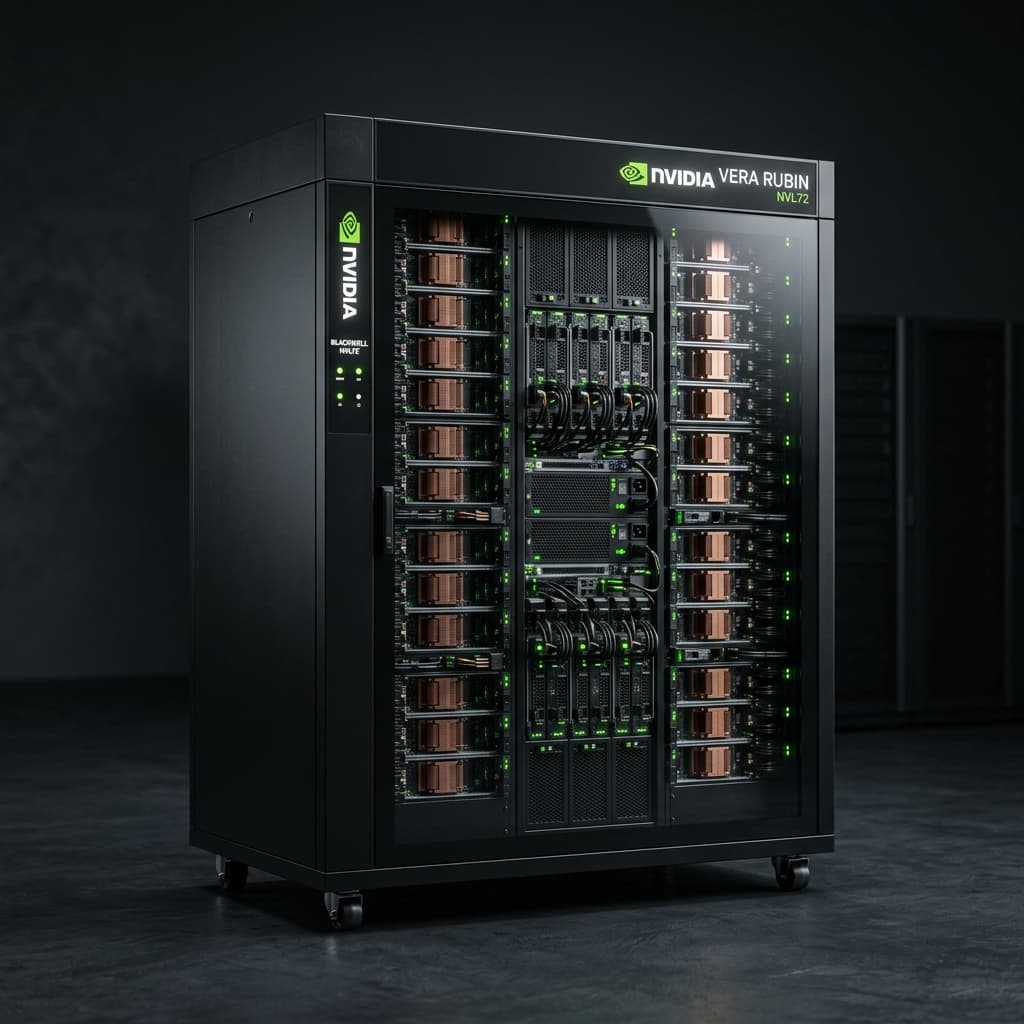
NVIDIA Vera Rubin NVL72
High-performance computing system with 72 NVIDIA Rubin GPUs and 36 NVIDIA Vera CPUs.
Where it wins, where it doesn't
Pros
- Offers up to 9,360 TFLOPS FP32 and 288 PFLOPS FP16/BF16 for high-performance computing.
- Equipped with up to 54 TB of LPDDR5X CPU memory, ensuring ample resources for complex tasks.
- Supports up to 20.7 TB HBM4 GPU memory with 1,400 TB/s bandwidth, ideal for data-intensive applications.
Cons
- High power consumption and cooling requirements make it unsuitable for environments without robust infrastructure.
- Limited networking bandwidth in smaller configurations restricts scalability and flexibility.
- Complex NVLink requirements necessitate a specific setup, complicating deployment and maintenance.
Specifications
- Bluetooth—
- Configuration72 NVIDIA Rubin GPUs | 36 NVIDIA Vera CPUs | 2 NVIDIA Rubin GPUs | 1 NVIDIA Vera CPU | 1 NVIDIA Rubin GPU
- CPU—
- CPU Core Count3,168 custom NVIDIA Olympus cores | 6,336 Threads | 88 custom NVIDIA Olympus cores | 176 Threads | -
- CPU MemoryUp to 54 TB LPDDR5X | Up to 1.5 TB LPDDR5X | -
- Displays Supported—
- FP16/BF16³288 PFLOPS | 8 PFLOPS | 4 PFLOPS
- FP329,360 TFLOPS | 260 TFLOPS | 130 TFLOPS
- FP642,400 TFLOPS | 67 TFLOPS | 33 TFLOPS
- FP8/FP6 Training³1,260 PFLOPS | 35 PFLOPS | 17.5 PFLOPS
- GPU—
- GPU Memory | Bandwidth20.7 TB HBM4 | 1,400 TB/s | 576 GB HBM4 | 38.5 TB/s | 288 GB HBM4 | 19.2 TB/s
- GPUs in 100 MW¹40K GPUs
- Inlet Temp45°C
- memory—
- Memory Bandwidth—
- Networking Bandwidth (Scale-Out)´32.4 TB/s | 0.9 TB/s | 0.45 TB/s
- NVFP4 Inference²3,600 PFLOPS | 100 PFLOPS | 50 PFLOPS
- NVFP4 Training³2,520 PFLOPS | 70 PFLOPS | 35 PFLOPS
- NVIDIA NVLinkSixth Generation
- NVLink Bandwidth216 TB/s | 6 TB/s | 3 TB/s
- NVLink-C2C Bandwidth65 TB/s | 1.8 TB/s | -
- SSD Architecture—
- Storage Performance—
- Studio Display XDR—
- TF32³144 PFLOPS | 4 PFLOPS | 2 PFLOPS
- Thunderbolt—
- Thunderbolt 5 Bandwidth—
- Total NVIDIA + HBM4 Chips1,296 | 30 | 12
- Unified Memory—
- Wi-Fi—