Versus Engine
Apple Mac Studio (M5 Max/Ultra) vs NVIDIA Vera CPU
Specs, price and the one trade-off that actually decides it — Apple Mac Studio (M5 Max/Ultra) against NVIDIA Vera CPU, side by side.
Cheaper to start
Tie
Both start at a similar price.
Best ecosystem
Tie
Neither lists native integrations.
Standout
Apple Mac Studio (M5 Max/Ultra)
Up to 512GB unified memory
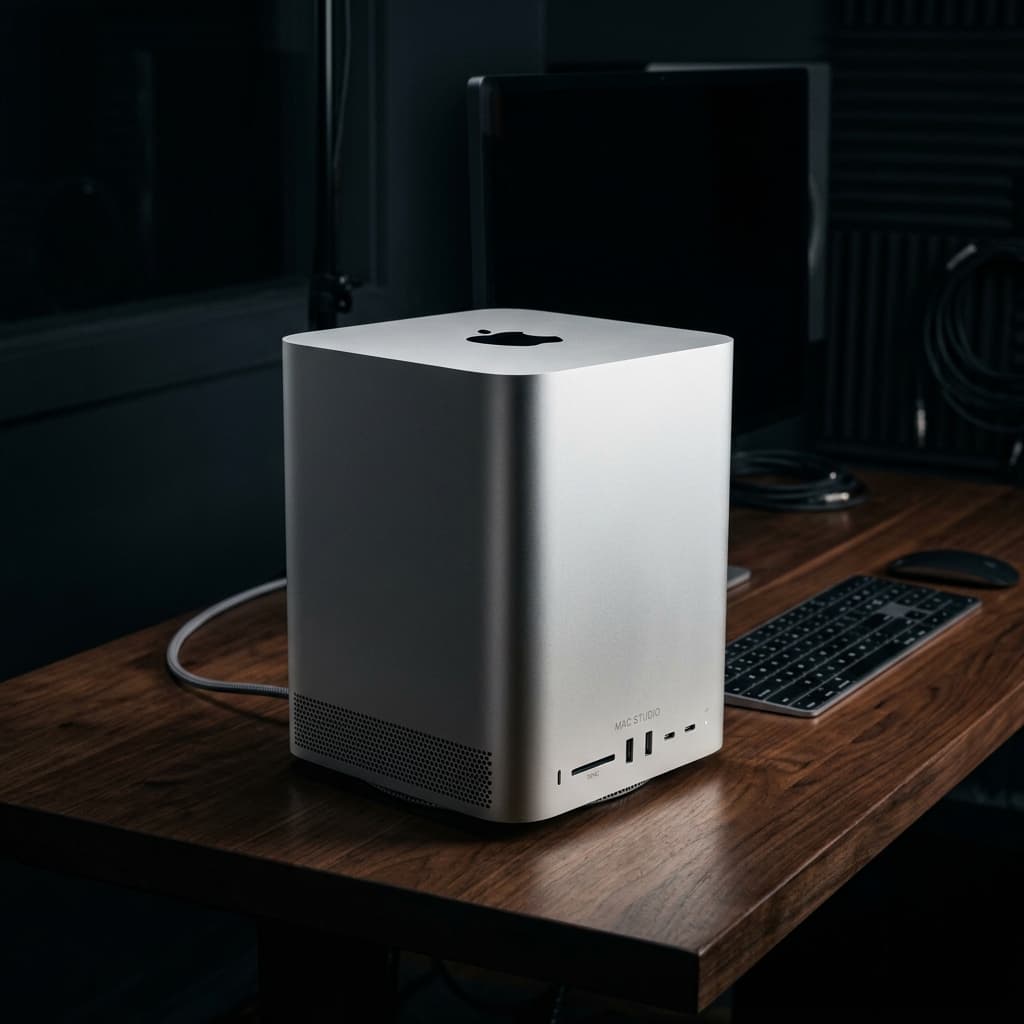
Apple Mac Studio (M5 Max/Ultra)
Extreme performance desktop for pro workflows, supporting up to 512GB of unified memory.
Where it wins, where it doesn't
Pros
- Supports up to 512GB of unified memory for demanding workloads.
- Up to 80-core GPU for exceptional graphics and computational performance.
- Next-generation SSD architecture and twice-as-fast storage performance.
Cons
- High power draw necessitates a specific power supply.
- Expensive at $5499, making it a niche product for professionals.
Specifications
- BluetoothBluetooth 6
- CPU36-core
- Displays Supportedup to eight
- GPUup to 80-core
- Host CPU—
- LPDDR5X Memory Subsystem—
- memoryUp to 512GB Unified
- Memory Bandwidth1.2TB/s
- NVIDIA NVLink-C2C—
- Second-Generation NVIDIA SCF—
- Single-threaded performance—
- SSD Architecturenext-generation
- Standalone CPU—
- Storage Performanceup to twice as fast
- Studio Display XDRup to four at full 5K resolution and 120Hz
- ThunderboltThunderbolt 5
- Thunderbolt 5 Bandwidth120Gb/s
- Unified Memoryup to 512GB
- Wi-FiWi-Fi 7
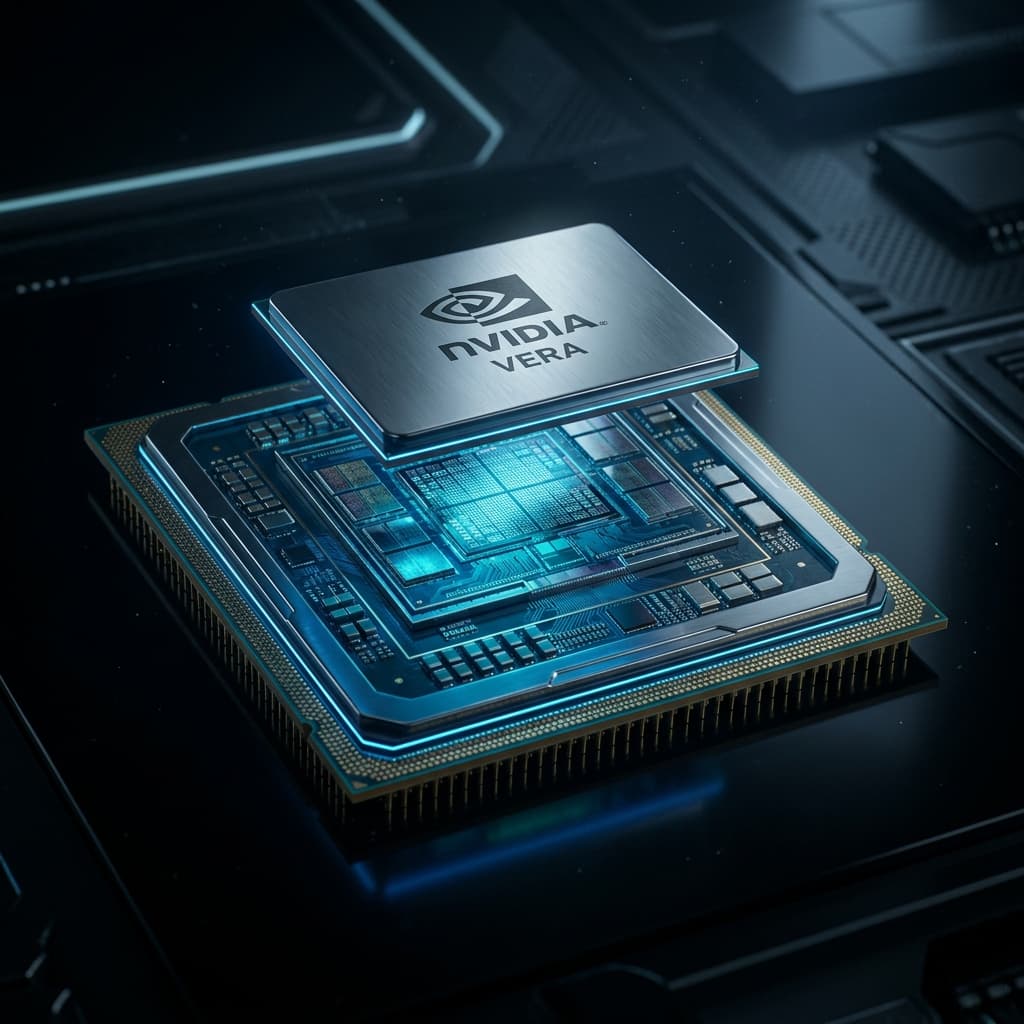
NVIDIA Vera CPU
NVIDIA Vera CPU for AI factories and HPC workloads with high single-threaded performance and massive memory bandwidth.
Where it wins, where it doesn't
Pros
- High single-threaded performance for fast software execution.
- Massive LPDDR5X memory bandwidth (up to 1.2 TB/s) for efficient data-intensive workloads.
- Second-generation NVIDIA SCF for fast, consistent data access across cores.
Cons
- Specialized design may limit applicability for general-purpose computing tasks.
Specifications
- Bluetooth—
- CPU—
- Displays Supported—
- GPU—
- Host CPUNVIDIA Vera delivers system-level efficiency as the host CPU for AI factories, including NVIDIA Vera Rubin NVL72 and HGX™ Vera Rubin NVL8 platforms. Vera feeds GPUs for large-scale AI while running the CPU work that keeps the factory operating, including ETL, key-value (KV) cache management, and orchestration. With high single-threaded performance, massive memory bandwidth, and a single compute die design that avoids cross-chiplet latency, Vera delivers predictable performance while keeping GPUs fully utilized across accelerated AI and HPC systems.
- LPDDR5X Memory SubsystemNVIDIA Vera delivers up to 1.2 terabytes per second (TB/s) of LPDDR5X memory bandwidth, providing 2x the bandwidth at half the power of traditional CPU memory. This keeps thousands of parallel software environments responsive while supporting faster RL iterations, efficient KV-cache management, and data-intensive agentic workflows. With up to 1.5 TB of memory, Vera provides the capacity and efficiency for AI factories, analytics, and HPC workloads.
- memory—
- Memory Bandwidth—
- NVIDIA NVLink-C2CNVIDIA NVLink-C2C delivers up to 1.8 TB/s of coherent bandwidth between Vera CPUs and NVIDIA GPUs. When paired with NVIDIA Rubin GPUs, Vera creates a unified memory architecture that helps CPUs and GPUs work together on complex AI and HPC workloads, large datasets, and KV-cache offload. NVLink-C2C reduces data-transfer bottlenecks, simplifies optimization, supports secure isolation for sensitive data and code, and enables high-speed connectivity in dual-socket Vera CPU systems.
- Second-Generation NVIDIA SCFNVIDIA Vera uses second-generation NVIDIA SCF to connect all 88 cores, cache, memory, input and output (IO), and NVLink-C2C across a single compute die. With 3.4 TB/s of bisectional bandwidth and a unified cache architecture, SCF gives cores fast, consistent access to data even when the CPU is fully utilized. By avoiding cross-chiplet communication, Vera maintains predictable latency and throughput for agentic workloads, analytics, and AI factory infrastructure at scale.
- Single-threaded performancehelps software environments, tool calls, and evaluation loops complete faster, while NVIDIA Spatial Multithreading creates 176 threads with partitioned core resources for predictable throughput at scale.
- SSD Architecture—
- Standalone CPUFor agentic AI, reinforcement learning, data processing, and analytics, NVIDIA Vera delivers leading per-core performance and massive memory bandwidth to run thousands of parallel sandbox environments, tool calls, code executions, evaluation loops, and data workflows. Faster CPU execution means agents wait less, RL systems generate more feedback per training step, and AI factories produce more tokens per dollar. As a standalone CPU platform, Vera also supports hyperscale cloud, enterprise, and HPC workloads and extends to storage infrastructure with NVIDIA Vera BlueField™-4 STX. Available as a dense, liquid-cooled NVIDIA Vera CPU rack or in standard dual- and single-socket configurations, Vera fits any data center.
- Storage Performance—
- Studio Display XDR—
- Thunderbolt—
- Thunderbolt 5 Bandwidth—
- Unified Memory—
- Wi-Fi—