Versus Engine
Apple Mac mini (M6) vs NVIDIA Vera CPU
Specs, price and the one trade-off that actually decides it — Apple Mac mini (M6) against NVIDIA Vera CPU, side by side.
Cheaper to start
Tie
Both start at a similar price.
Best ecosystem
Tie
Neither lists native integrations.
Standout
Apple Mac mini (M6)
Apple M6 chip with 12-core CPU and 12-core GPU
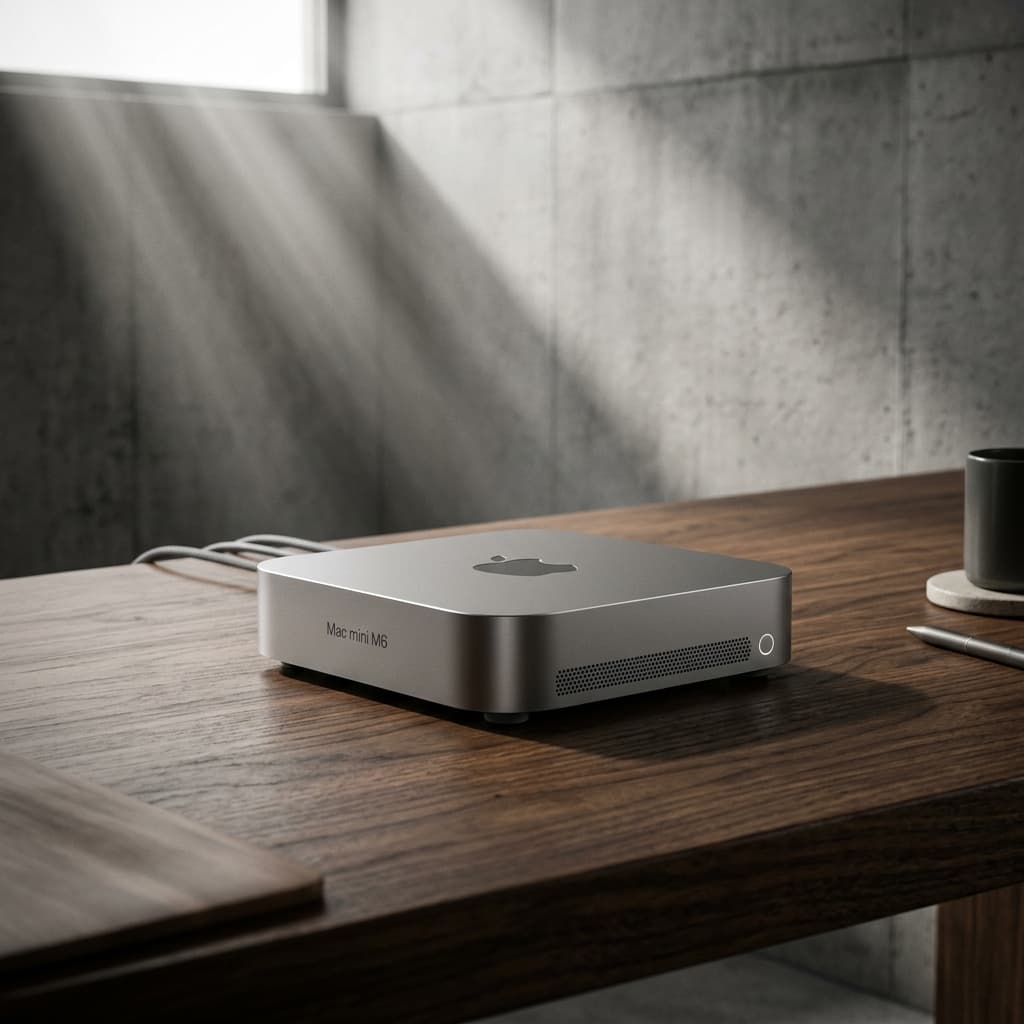
Apple Mac mini (M6)
The 2026 Mac mini featuring M6 and M5 Pro chips for up to 4x faster local AI performance.
Where it wins, where it doesn't
Pros
- Equipped with the Apple M6 chip, offering robust CPU and GPU performance.
- Supports up to three external displays with high-resolution output.
- Compact form factor with a small footprint and low power consumption.
Cons
- Base configuration includes only 16GB of unified memory, limiting performance for intensive tasks.
Specifications
- architectureARM64
- BluetoothBluetooth 6
- ChipApple M6 chip 12–core CPU with 2 super cores, 4 performance cores, and 6 efficiency cores 12-core GPU Neural Accelerators Hardware-accelerated ray tracing Dual 16-core Neural Engine 153GB/s memory bandwidth Media Engine Hardware-accelerated H.264, HEVC, ProRes, and ProRes RAW Video decode engine Video encode engine ProRes encode and decode engine AV1 decode — Not configurable Apple M6 chip 12–core CPU with 2 super cores, 4 performance cores, and 6 efficiency cores 12-core GPU Neural Accelerators Hardware-accelerated ray tracing Dual 16-core Neural Engine 170GB/s memory bandwidth Media Engine Hardware-accelerated H.264, HEVC, ProRes, and ProRes RAW Video decode engine Video encode engine ProRes encode and decode engine AV1 decode — Not configurable Apple M6 chip 12–core CPU with 2 super cores, 4 performance cores, and 6 efficiency cores 12-core GPU Neural Accelerators Hardware-accelerated ray tracing Dual 16-core Neural Engine 170GB/s memory bandwidth Media Engine Hardware-accelerated H.264, HEVC, ProRes, and ProRes RAW Video decode engine Video encode engine ProRes encode and decode engine AV1 decode — Not configurable Apple M5 Pro chip 15-core CPU with 5 super cores and 10 performance cores 16-core GPU Neural Accelerators Hardware-accelerated ray tracing 16-core Neural Engine 307GB/s memory bandwidth Media Engine Hardware-accelerated H.264, HEVC, ProRes, and ProRes RAW Video decode engine Video encode engine ProRes encode and decode engine AV1 decode Configurable to: M5 Pro with 18–core CPU and 20–core GPU Memory 16GB 16GB unified memory Configurable to: 24GB or 32GB (170GB/s memory bandwidth) 16GB 16GB unified memory Configurable to: 24GB or 32GB (170GB/s memory bandwidth) 24GB 24GB unified memory Configurable to: 32GB 24GB 24GB unified memory Configurable to: 48GB or 64GB Storage 1 256GB 256GB SSD Configurable to: 512GB, 1TB, or 2TB 512GB 512GB SSD Configurable to: 1TB or 2TB 512GB 512GB SSD Configurable to: 1TB or 2TB 512GB 512GB SSD Configurable to: 1TB, 2TB, 4TB, or 8TB Display Support M6 Supports up to three external displays using Thunderbolt and HDMI ports: Three displays: Two displays up to a native resolution of 6K at 60Hz or 4K at 165Hz, plus a third display up to 5K at 60Hz over Thunderbolt or 4K at 60Hz over HDMI Up to two displays: One display up to a native resolution of 8K at 60Hz or 5K at 120Hz or 4K at 240Hz, plus a second display up to 5K at 60Hz over Thunderbolt or 4K at 60Hz over HDMI Supports up to two external displays over a single Thunderbolt port Thunderbolt 4 (USB-C) ports support native DisplayPort 1.4 speeds Supports variable refresh rate (VRR), HDR, and multichannel audio M5 Pro Supports up to three external displays over any combination of Thunderbolt and HDMI ports: Three displays up to a native resolution of 6K at 60Hz or 4K at 165Hz Up to two displays: One display up to a native resolution of 8K at 60Hz or 5K at 120Hz or 4K at 240Hz, plus a second display up to 5K at 120Hz or 4K at 200Hz Supports up to three external displays over a single Thunderbolt port Thunderbolt 5 (USB-C) ports support native DisplayPort 2.1 speeds (M5 Pro): 2.5Gb Ethernet port (configurable to 10Gb Ethernet) HDMI port Three Thunderbolt 5 (USB-C) ports with support for: Thunderbolt 5 (up to 120Gb/s) USB 4 (up to 40Gb/s) DisplayPort Ethernet HDMI Thunderbolt 5 Communications Wireless Apple N1 wireless networking chip Wi‑Fi 7 (802.11be) 2 Bluetooth 6 Thread networking technology Ethernet 100/1000/2500BASE-T Multi-Gigabit Ethernet (RJ-45 connector) Configurable to 10Gb Ethernet (Nbase-T Ethernet with support for 1Gb, 2.5Gb, 5Gb, and 10Gb Ethernet using RJ-45 connector) Size and Weight Height: 2.0 inches (5.0 cm) Width: 5.0 inches (12.7 cm) Depth: 5.0 inches (12.7 cm) Weight (M6): 1.5 pounds (0.67 kg) 3 Weight (M5 Pro): 1.6 pounds (0.73 kg) 3 5.0 inches (12.7 cm) 5.0 inches (12.7 cm) 2.0 inches (5.0 cm) Electrical and Operating Requirements Line voltage: 100–240V AC Frequency: 50Hz to 60Hz, single phase Maximum continuous power: 155W Operating temperature: 50° to 95° F (10° to 35° C) Storage temperature: −40° to 116° F (−40° to 47° C) Relative humidity: 5% to 90% noncondensing Operating altitude: tested up to 16,400 feet (5000 meters) Typical acoustical performance: Sound pressure level (operator position): 5 dBA at idle 4 In the Box Mac mini Power cord (1.8 m) Operating System macOS
- CommunicationsApple N1 wireless networking chip Wi‑Fi 7 (802.11be) 2 Bluetooth 6 Thread networking technology
- Connectivity / Fronttwo USB-C ports and a 3.5mm headphone jack
- CPU12-core
- Display SupportM6 Supports up to three external displays using Thunderbolt and HDMI ports: Three displays: Two displays up to a native resolution of 6K at 60Hz or 4K at 165Hz, plus a third display up to 5K at 60Hz over Thunderbolt or 4K at 60Hz over HDMI Up to two displays: One display up to a native resolution of 8K at 60Hz or 5K at 120Hz or 4K at 240Hz, plus a second display up to 5K at 60Hz over Thunderbolt or 4K at 60Hz over HDMI Supports up to two external displays over a single Thunderbolt port Thunderbolt 4 (USB-C) ports support native DisplayPort 1.4 speeds Supports variable refresh rate (VRR), HDR, and multichannel audio M5 Pro Supports up to three external displays over any combination of Thunderbolt and HDMI ports: Three displays up to a native resolution of 6K at 60Hz or 4K at 165Hz Up to two displays: One display up to a native resolution of 8K at 60Hz or 5K at 120Hz or 4K at 240Hz, plus a second display up to 5K at 120Hz or 4K at 200Hz Supports up to three external displays over a single Thunderbolt port Thunderbolt 5 (USB-C) ports support native DisplayPort 2.1 speeds
- Display Support / 1 display8K/60, 5K/120, or 4K/240
- Display Support / 2 displays2× 6K/60 or 4K/165 ; or 8K/60, 5K/120, or 4K/240 + 5K/60
- Display Support / 3 displays2× 6K/60 or 4K/165 + 1× 5K/60
- Ethernet2.5Gb Ethernet port (configurable to 10Gb Ethernet) HDMI port Three Thunderbolt 5 (USB-C) ports with support for: Thunderbolt 5 (up to 120Gb/s) USB 4 (up to 40Gb/s) DisplayPort Ethernet HDMI Thunderbolt 5
- GPU12-core
- Host CPU—
- In the BoxMac mini Power cord (1.8 m)
- LPDDR5X Memory Subsystem—
- Memory16GB 16GB unified memory Configurable to: 24GB or 32GB (170GB/s memory bandwidth) 16GB 16GB unified memory Configurable to: 24GB or 32GB (170GB/s memory bandwidth) 24GB 24GB unified memory Configurable to: 32GB 24GB 24GB unified memory Configurable to: 48GB or 64GB
- Memory Bandwidthup to 170GB/s
- NVIDIA NVLink-C2C—
- Operating SystemmacOS
- Second-Generation NVIDIA SCF—
- Single-threaded performance—
- Size and WeightHeight: 2.0 inches (5.0 cm) Width: 5.0 inches (12.7 cm) Depth: 5.0 inches (12.7 cm) Weight (M6): 1.5 pounds (0.67 kg) 3 Weight (M5 Pro): 1.6 pounds (0.73 kg) 3
- Standalone CPU—
- Storage256GB 256GB SSD Configurable to: 512GB, 1TB, or 2TB 512GB 512GB SSD Configurable to: 1TB or 2TB 512GB 512GB SSD Configurable to: 1TB or 2TB 512GB 512GB SSD Configurable to: 1TB, 2TB, 4TB, or 8TB
- Storage Speed6,000-6,400 MB/s write speeds and 6,000-6,300 MB/s read speeds
- Wi-FiWi-Fi 7
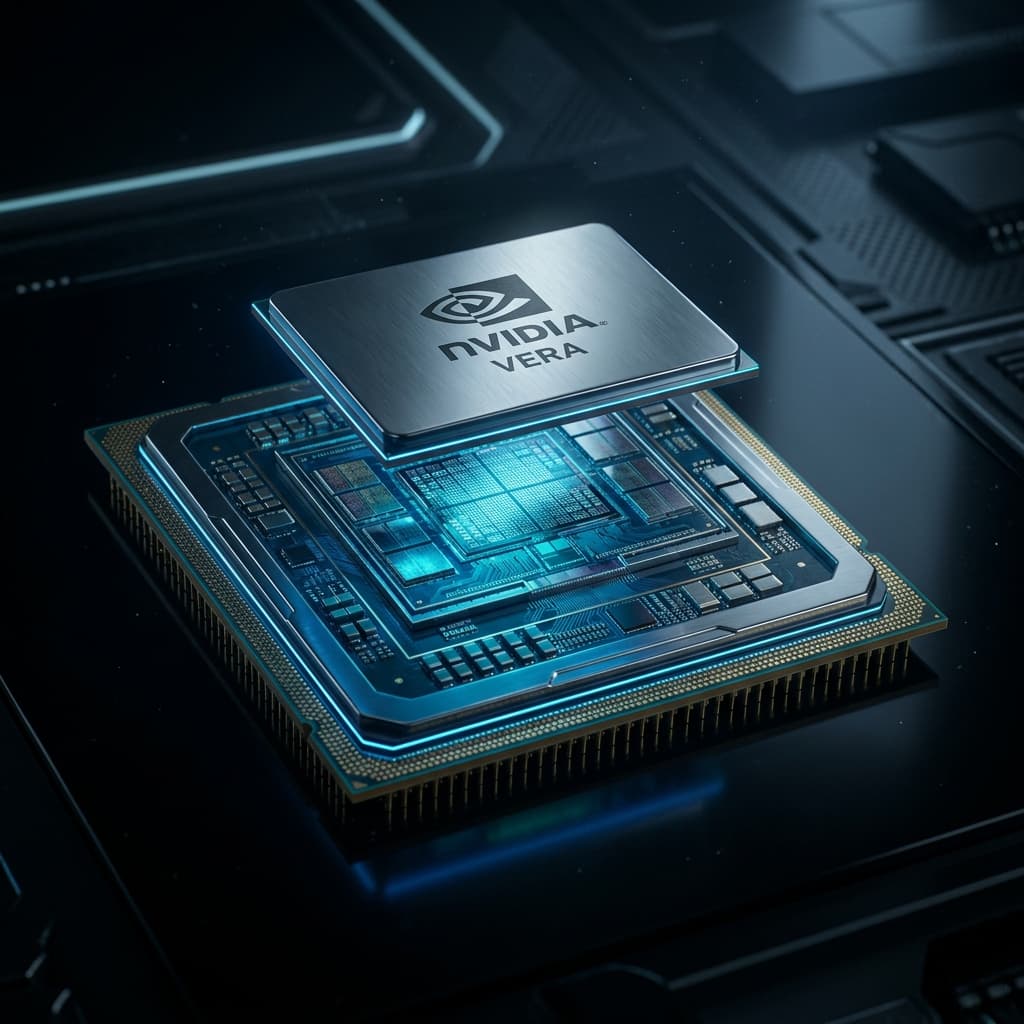
NVIDIA Vera CPU
NVIDIA Vera CPU for AI factories and HPC workloads with high single-threaded performance and massive memory bandwidth.
Where it wins, where it doesn't
Pros
- High single-threaded performance for fast software execution.
- Massive LPDDR5X memory bandwidth (up to 1.2 TB/s) for efficient data-intensive workloads.
- Second-generation NVIDIA SCF for fast, consistent data access across cores.
Cons
- Specialized design may limit applicability for general-purpose computing tasks.
Specifications
- architecture—
- Bluetooth—
- Chip—
- Communications—
- Connectivity / Front—
- CPU—
- Display Support—
- Display Support / 1 display—
- Display Support / 2 displays—
- Display Support / 3 displays—
- Ethernet—
- GPU—
- Host CPUNVIDIA Vera delivers system-level efficiency as the host CPU for AI factories, including NVIDIA Vera Rubin NVL72 and HGX™ Vera Rubin NVL8 platforms. Vera feeds GPUs for large-scale AI while running the CPU work that keeps the factory operating, including ETL, key-value (KV) cache management, and orchestration. With high single-threaded performance, massive memory bandwidth, and a single compute die design that avoids cross-chiplet latency, Vera delivers predictable performance while keeping GPUs fully utilized across accelerated AI and HPC systems.
- In the Box—
- LPDDR5X Memory SubsystemNVIDIA Vera delivers up to 1.2 terabytes per second (TB/s) of LPDDR5X memory bandwidth, providing 2x the bandwidth at half the power of traditional CPU memory. This keeps thousands of parallel software environments responsive while supporting faster RL iterations, efficient KV-cache management, and data-intensive agentic workflows. With up to 1.5 TB of memory, Vera provides the capacity and efficiency for AI factories, analytics, and HPC workloads.
- Memory—
- Memory Bandwidth—
- NVIDIA NVLink-C2CNVIDIA NVLink-C2C delivers up to 1.8 TB/s of coherent bandwidth between Vera CPUs and NVIDIA GPUs. When paired with NVIDIA Rubin GPUs, Vera creates a unified memory architecture that helps CPUs and GPUs work together on complex AI and HPC workloads, large datasets, and KV-cache offload. NVLink-C2C reduces data-transfer bottlenecks, simplifies optimization, supports secure isolation for sensitive data and code, and enables high-speed connectivity in dual-socket Vera CPU systems.
- Operating System—
- Second-Generation NVIDIA SCFNVIDIA Vera uses second-generation NVIDIA SCF to connect all 88 cores, cache, memory, input and output (IO), and NVLink-C2C across a single compute die. With 3.4 TB/s of bisectional bandwidth and a unified cache architecture, SCF gives cores fast, consistent access to data even when the CPU is fully utilized. By avoiding cross-chiplet communication, Vera maintains predictable latency and throughput for agentic workloads, analytics, and AI factory infrastructure at scale.
- Single-threaded performancehelps software environments, tool calls, and evaluation loops complete faster, while NVIDIA Spatial Multithreading creates 176 threads with partitioned core resources for predictable throughput at scale.
- Size and Weight—
- Standalone CPUFor agentic AI, reinforcement learning, data processing, and analytics, NVIDIA Vera delivers leading per-core performance and massive memory bandwidth to run thousands of parallel sandbox environments, tool calls, code executions, evaluation loops, and data workflows. Faster CPU execution means agents wait less, RL systems generate more feedback per training step, and AI factories produce more tokens per dollar. As a standalone CPU platform, Vera also supports hyperscale cloud, enterprise, and HPC workloads and extends to storage infrastructure with NVIDIA Vera BlueField™-4 STX. Available as a dense, liquid-cooled NVIDIA Vera CPU rack or in standard dual- and single-socket configurations, Vera fits any data center.
- Storage—
- Storage Speed—
- Wi-Fi—